

Native & adapted
Peruvian apple cactus
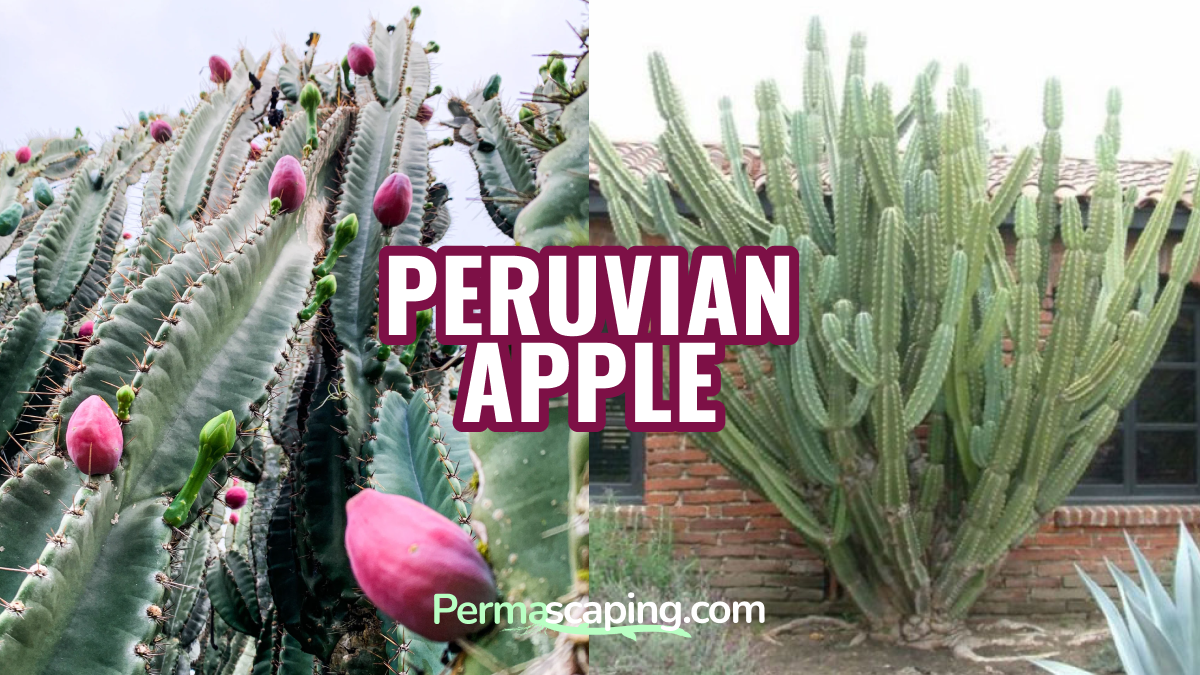
Cereus repandusFast columnar cactus with edible fruit; best in the warmest microclimates and protected from hard frost.
Right plant, right place
Will Peruvian apple cactus grow at your Arizona property?
A fast columnar cactus, often adding 1–2 ft annually under good conditions. Keep mature stems clear of eaves, utilities, and narrow paths.
Best regional fit: Urban core · USDA 9b–10a, Valley suburbs · USDA 9a–9b, Desert outskirts · USDA 8b–9b.
Light
Sun exposure
Full sun to light shade. Acclimate nursery-grown stems before exposing them to intense reflected sun.
Water
Irrigation
Very low. Deep but infrequent warm-season irrigation can increase growth and fruiting; soil must drain completely.
Harvest
How to use it
Spoon out the mild white flesh and eat fresh or chilled; confirm identification before eating any cactus fruit.
Choose the actual plant, not only the label
Cultivars & selections
Seed-grown and cutting-grown plants vary in rib count, blue-green color, spininess, and fruit quality. A cutting from a known productive parent is the best food-producing selection.
Selected fruiting clone
Cereus repandusMature size15–30 ft tall × 3–6 ft wide per clump
Best forKnown fruit quality and predictable stem form
Choose a cutting-propagated plant from a productive, correctly identified parent when harvest is the goal; unnamed seedlings are more variable.
Planting & stewardship
How to help Peruvian apple cactus thrive
- 1
Confirm the plant’s mature spread and underground conflicts before digging.
- 2
Place the root flare at finished grade and keep mulch away from the trunk.
- 3
Establish a wide, deep root zone instead of irrigating only at the trunk.
- 4
Observe seasonal growth, heat stress, and wildlife use before making major pruning changes.