

Watershed planner: catchments, gutters, earthworks, storage and greywater
Phoenix gets about 7 inches of rain a year, and most of it runs off the roof and down the street. Measure your roof on the map, see the gallons, then draw the gutters, basins and tanks that keep it. Free, on any address.
Measure your roof and see the gallons
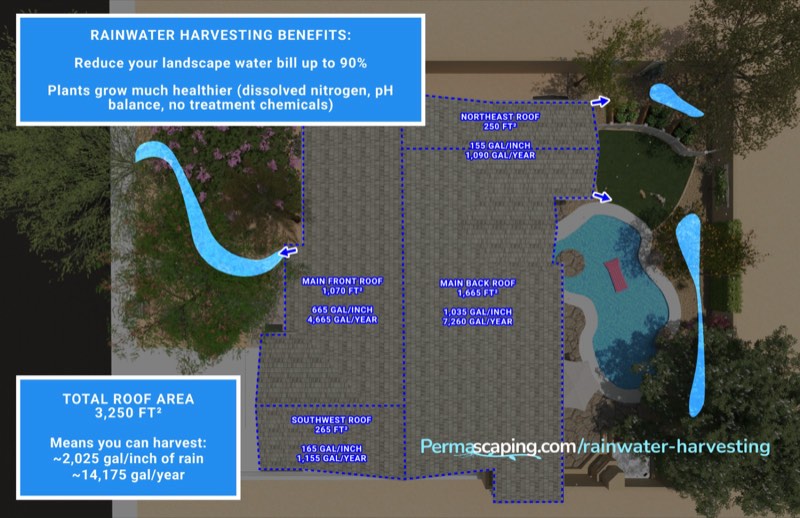
Your address opens a satellite photo of your lot. Trace the roof and every surface that sheds water, and the gallons per storm and per year come from the actual shapes, at the real rainfall for that spot. Save it to your property when you are ready for gutters, basins and tanks.
Save this to your property
A free account turns these shapes into your property, where the planner adds gutters, basins and tanks on the same map and any estimate you ask for starts from them. What you drew here stays on this device in the meantime.
One map, five tabs
Catchments, gutters, basins and storage used to be five screens with five maps, and the question everyone has could not be asked on any of them: of the gutter I could run, which foot of it earns the most. So it is one map and one set of shapes.
Catchments
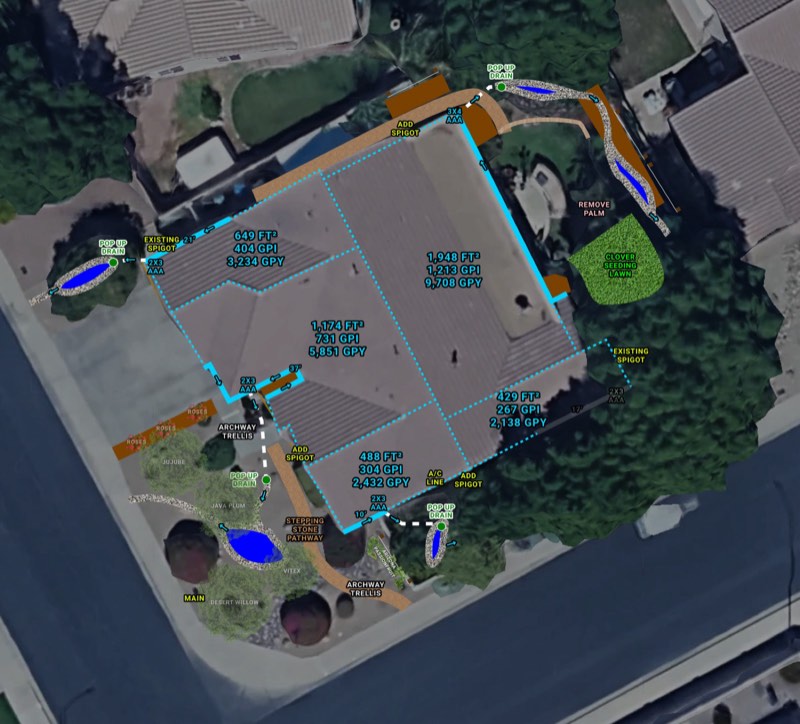
Trace your roof and every surface that sheds water: the driveway, the patio, the gravel. The planner looks up the real rainfall for your address and tells you the gallons each one sends off in a storm and in a year.
Gutters
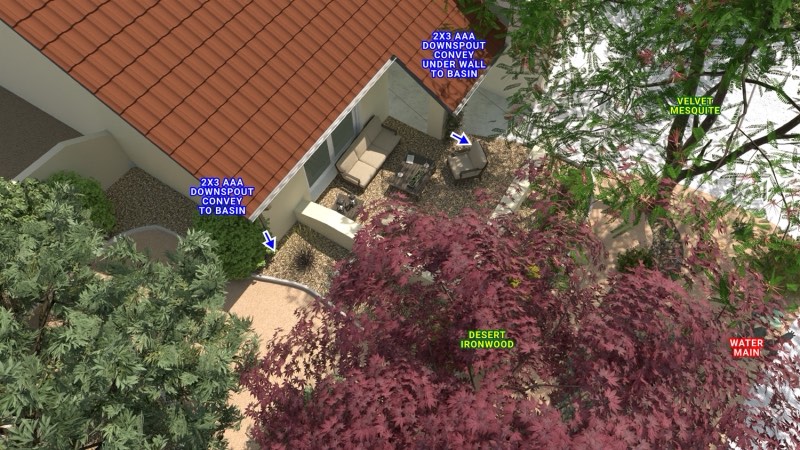
Lay out gutters and downspouts along the roof edges. The planner shows the square feet of roof each foot of gutter catches, so you can see which run earns its cost and which one is a day of work for a trickle.
Earthworks
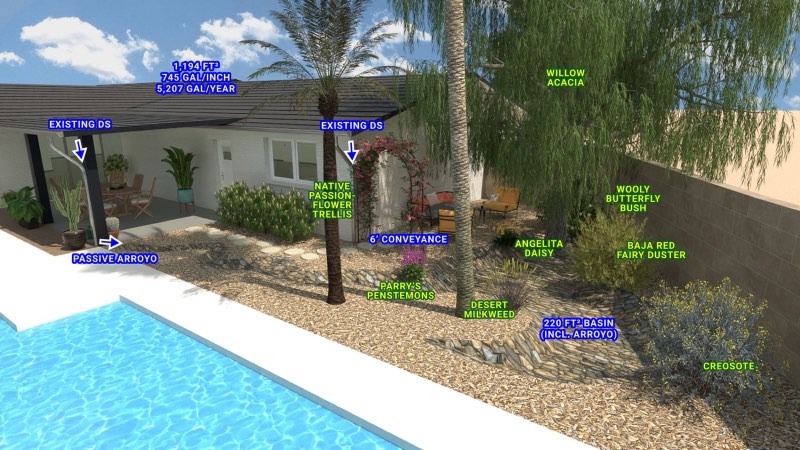
Draw basins and berms where the water should go. Give each one a depth and the planner tells you how many gallons it holds against the catchment feeding it, so a basin is sized for the storm, not guessed.
Storage
Size tanks and cisterns against the same numbers. A tank fills from one storm and holds the water for the dry weeks; the planner shows how big it needs to be for the roof section above it.

Greywater
Plan where the water already leaving the house can go: laundry and shower water to the trees that can use it, with the plants and lines on the same map.
The numbers behind it
- 7 inof rain a year in Phoenix, on average, spread across seven months
- 620 galper 1,000 square feet of roof, for every inch of rain
- 12,000 gala year off a typical 2,400 square foot roof
- The groundis the best storage: a basin holds hundreds of gallons for months
What you'll know at the end
- Gallons per storm and per year, for the roof and every surface that sheds
- Which feet of gutter earn the most, and where the downspouts land
- Basins sized against their catchments, with the gallons each holds
- Tank sizes that match the roof above them
- Where the greywater can go
- A plan a crew can price, if you would rather have the digging done
Questions
Does it really rain enough in Phoenix to bother?
Yes. Phoenix averages about 7 inches a year, spread across the year, and one inch on 1,000 square feet is 620 gallons. A typical 2,400 square foot roof sheds about 12,000 gallons a year, which runs down the driveway and into the street unless something catches it.
Where should I store the water, tanks or basins?
The ground first. A basin sinks hundreds of gallons deep into the soil in one storm and keeps it moist for months, at almost no cost. Tanks hold water for the dry weeks and make sense once the basins are in. Most of our designs use both.
How does the planner know my rainfall?
From the precipitation records for your address, not a single Valley-wide average. Type your address above the map and the inches update.
Do I need an account?
No. The map on this page opens on any address. With a free account the catchments, gutters, basins and tanks are saved to your property, and they feed any estimate you ask us for.
What should I check before digging a basin?
Where your utilities run. Call 811 before you dig; the app can prepare the Arizona 811 request for you. Then keep basins away from the foundation and let the overflow of one run into the next.
Request a consultation
Rather have it designed or done for you? Tell us about the property.
“Permascaping transformed my front yard into a sustainable, beautiful oasis. … The team’s expertise and attention to detail were outstanding, creating a low-maintenance, eco-friendly landscape that I absolutely love. … Highly recommend Permascaping for anyone looking to elevate their outdoor space in Arizona!”