

Native & adapted
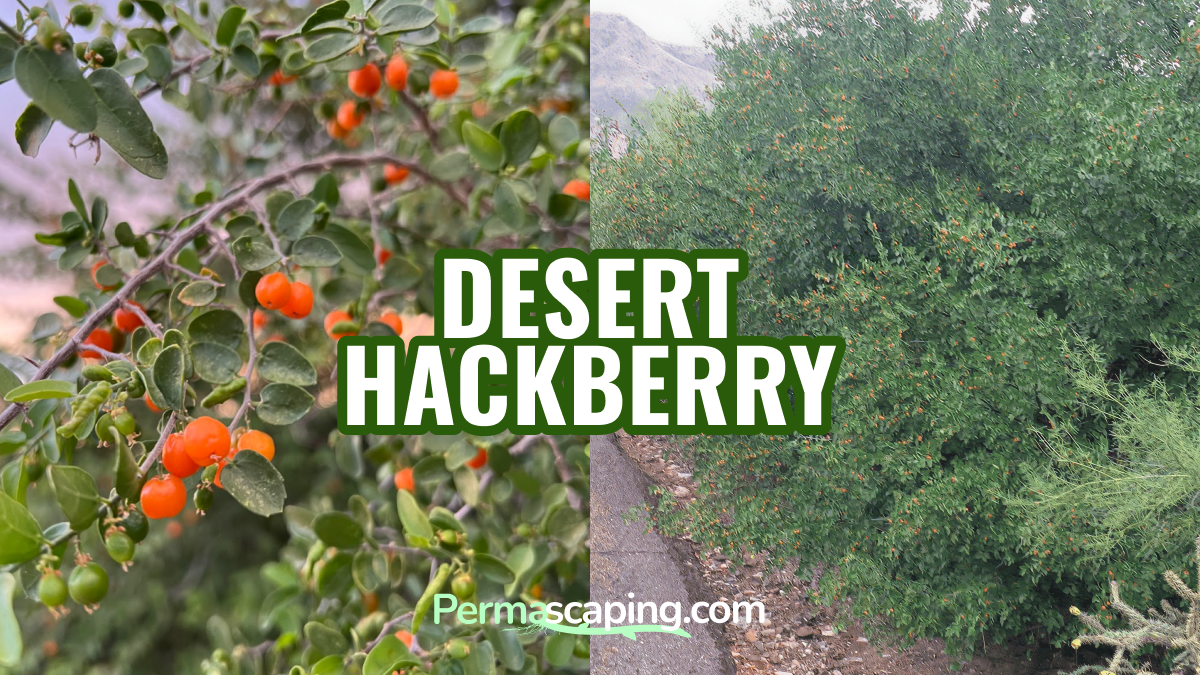
Desert hackberry
Celtis pallidaAlso known as Spiny hackberry · Celtis ehrenbergiana
Dense, thorny native that works as a low-canopy tree, understory thicket, or living hedge while its orange berries and protected branching feed and shelter desert wildlife.
Right plant, right place
Will Desert hackberry grow at your Arizona property?
Give its thorny structure room beside habitat corridors, basins, fences, or property edges rather than tight pedestrian areas.
Best regional fit: Urban core · USDA 9b–10a, Valley suburbs · USDA 9a–9b, Desert outskirts · USDA 8b–9b.
Light
Sun exposure
Full sun to part shade; especially useful in exposed desert sites and wildlife thickets.
Water
Irrigation
Very low once established. Deep summer irrigation every 2–3 weeks produces denser growth and more fruit.
Harvest
How to use it
The sweet, seedy berries are edible fresh or dried, though this plant is usually selected first for habitat value.
Choose the actual plant, not only the label
Cultivars & selections
Named cultivars are uncommon. Seed-grown plants naturally vary in thorniness, density, and tree-like versus shrubby form; select the architecture that fits the job.
Local seed-grown desert hackberry
Celtis pallida / Celtis ehrenbergianaMature size10–15 ft tall × 10–15 ft wide
Best forWildlife hedges, property edges, and low-canopy habitat
Choose a dense individual for screening or a more upright plant for small-tree training. All forms need clearance from high-traffic paths because of thorns.
Planting & stewardship
How to help Desert hackberry thrive
- 1
Choose whether the plant will become a hedge, multi-trunk screen, or low-canopy tree before structural pruning.
- 2
Water deeply through establishment, then lengthen the interval between irrigations.
- 3
Retain enough dense branching to preserve bird and small-animal cover.
- 4
Use gloves and long sleeves when pruning around its short, sharp thorns.