

Native & adapted
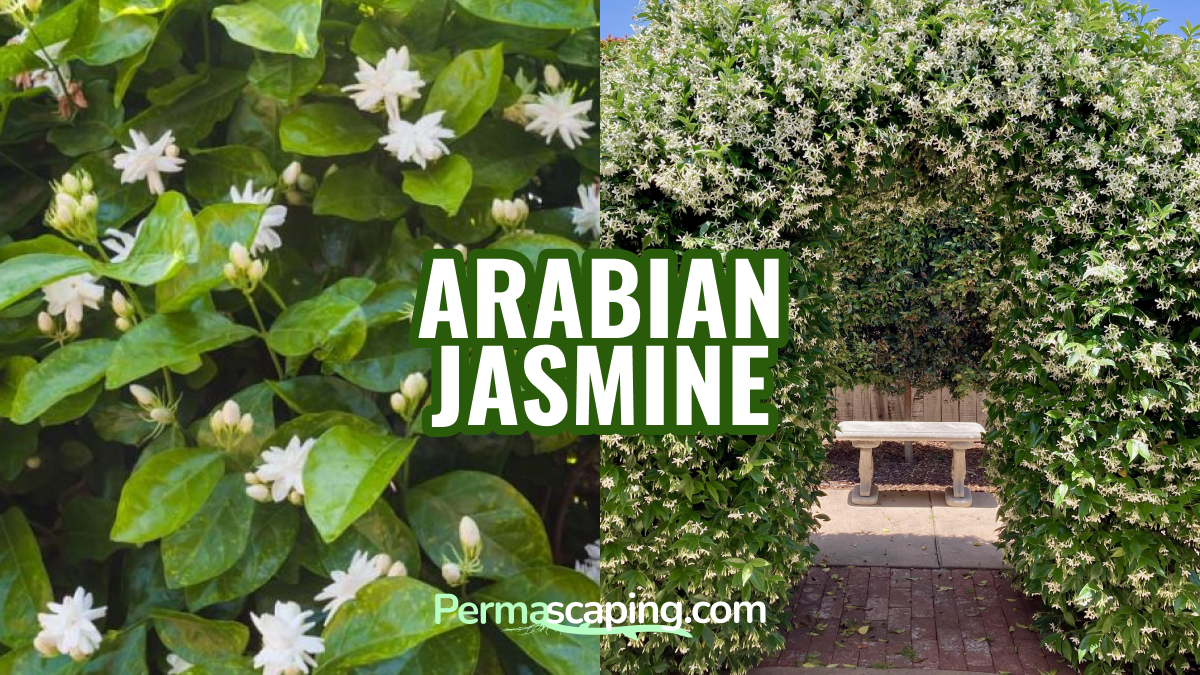
Arabian jasmine
Jasminum sambacIntensely fragrant jasmine for protected courtyards, north or east walls, containers, and trellises in the warmest desert microclimates.
Right plant, right place
Will Arabian jasmine grow at your Arizona property?
Best in a protected courtyard or near an entry where fragrance can be appreciated. It can be trained as a vine, shrub, hedge, or small treelet.
Best regional fit: Urban core · USDA 9b–10a, Valley suburbs · USDA 9a–9b.
Light
Sun exposure
Morning sun, filtered light, or bright shade; avoid exposed west walls in the low desert.
Water
Irrigation
Moderate and consistent in warm weather. Mulch and deep irrigation help keep the root zone cool without waterlogging it.
Harvest
How to use it
Fragrant flowers are traditionally used for tea, garlands, and scenting; only consume correctly identified, unsprayed flowers.
Choose the actual plant, not only the label
Cultivars & selections
Flower form and growth habit vary significantly among named cultivars; double forms emphasize fragrance and display, while single forms are often more freely flowering.
Maid of Orleans
Jasminum sambac ‘Maid of Orleans’Mature size4–8 ft tall × 4–6 ft wide
Best forFrequent single flowers and tea use
Vigorous and free flowering, with simple white blooms that are easy to harvest.
Grand Duke of Tuscany
Jasminum sambac ‘Grand Duke of Tuscany’Mature size3–6 ft tall × 3–5 ft wide
Best forHighly fragrant double flowers and containers
Slower, compact plant with rose-like double blooms; appreciates protection from both frost and extreme afternoon sun.
Belle of India
Jasminum sambac ‘Belle of India’Mature size4–8 ft tall × 3–6 ft wide
Best forElongated double flowers and a vining habit
Longer buds and semi-double to double flowers on growth that benefits from tying to support.
Planting & stewardship
How to help Arabian jasmine thrive
- 1
Choose a protected east- or north-facing microclimate.
- 2
Maintain even deep irrigation through summer without saturating the crown.
- 3
Tie long shoots to support or prune selectively into shrub form.
- 4
Protect during frost and feed lightly during active growth.