

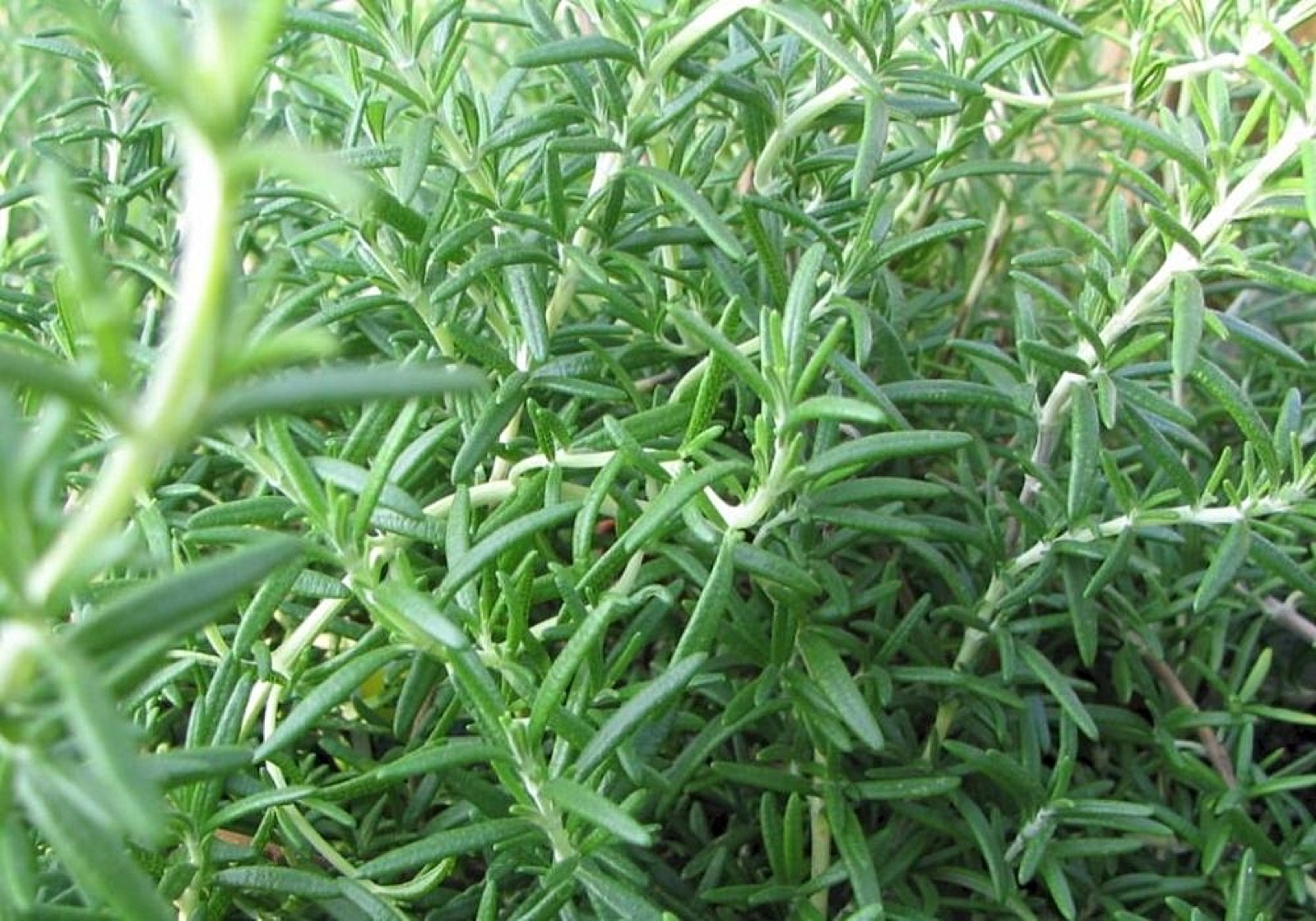
Native & adapted
Trailing rosemary
Salvia rosmarinus 'Prostratus'Also known as Creeping rosemary · Prostrate rosemary · Rosmarinus officinalis 'Prostratus'
An aromatic, cascading rosemary that softens walls and slopes while providing edible foliage and cool-season flowers for pollinators.
Right plant, right place
Will Trailing rosemary grow at your Arizona property?
Excellent on a wall, terrace, or slope where stems can cascade. Give it air movement and sharp drainage rather than a low, soggy basin.
Best regional fit: Urban core · USDA 9b–10a, Valley suburbs · USDA 9a–9b, Desert outskirts · USDA 8b–9b, High desert · USDA 6a–8b.
Light
Sun exposure
Full sun is best. In the hottest reflected courtyards, relief from late-afternoon sun can improve appearance.
Water
Irrigation
Low to moderate. Allow the root zone to drain between deep irrigations; rosemary declines in chronically wet soil.
Harvest
How to use it
Use fresh or dried leaves for savory cooking, infused oils, and aromatic garden edges.
Planting & stewardship
How to help Trailing rosemary thrive
- 1
Plant slightly high in well-drained soil and keep the crown clear of wet mulch.
- 2
Harvest or tip-prune regularly to encourage dense new growth without cutting hard into leafless wood.
- 3
Avoid overhead watering late in the day and do not combine it with high-water plants on the same valve.
- 4
Let some blue flowers remain for bees before the next shaping prune.