

Native & adapted
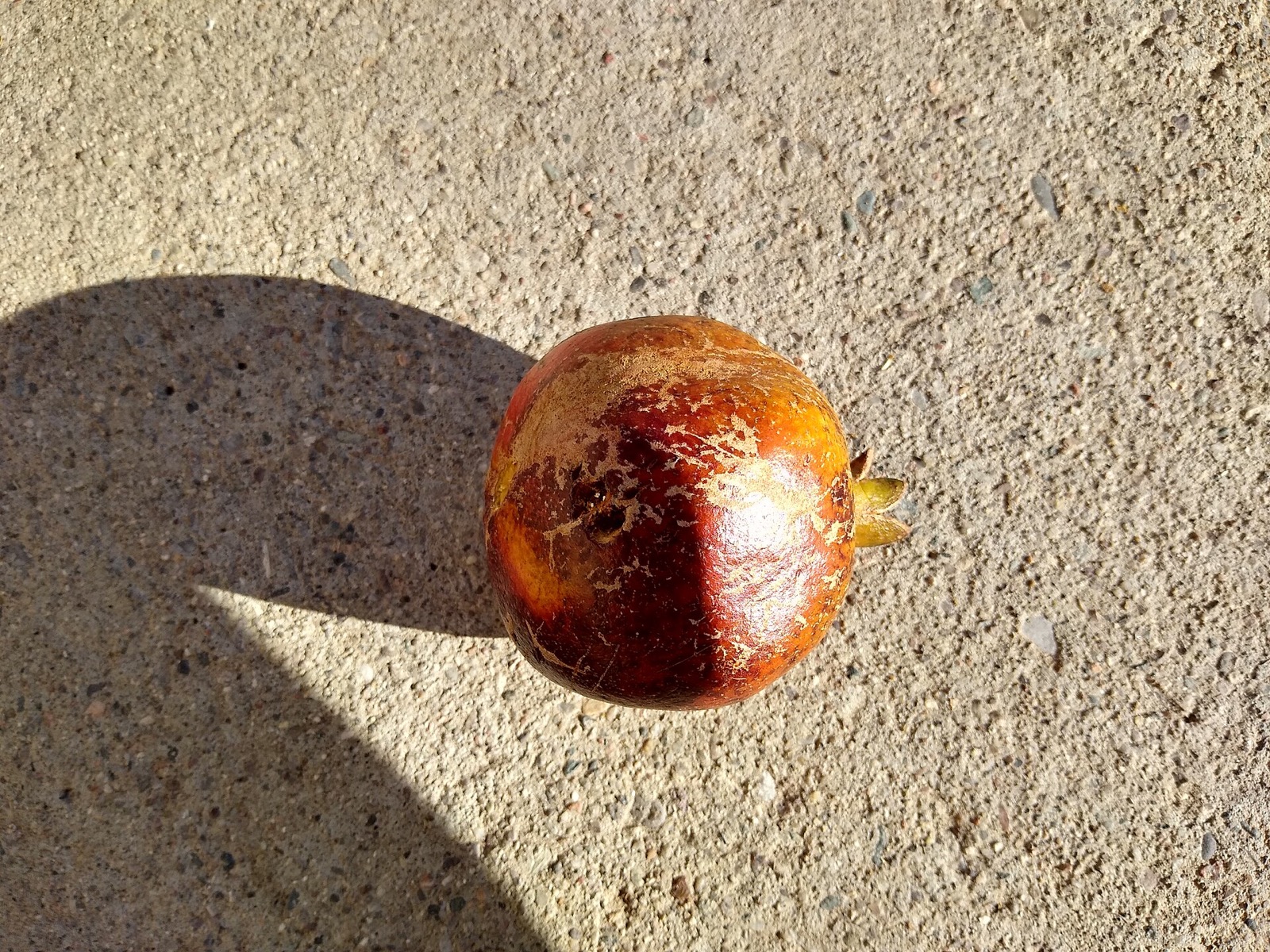
Pomegranate
Punica granatumOne of the Southwest’s most dependable fruits, tolerating heat and winter chill while accepting shrub or tree form.
Right plant, right place
Will Pomegranate grow at your Arizona property?
Use the whole site—not only the hardiness zone. Confirm mature width, reflected heat, seasonal shade, drainage, irrigation reach, and cold-air pockets before planting.
Best regional fit: Urban core · USDA 9b–10a, Valley suburbs · USDA 9a–9b, Desert outskirts · USDA 8b–9b, High desert · USDA 6a–8b.
Choose the actual plant, not only the label
Cultivars & selections
Cultivars range from tart, dark-red juice fruit to soft-seeded sweet fruit. Select for flavor, seed hardness, harvest window, and intended use—not flower color alone.
Wonderful
Punica granatum ‘Wonderful’Mature size8–15 ft tall × 8–15 ft wide
Best forClassic dark-red arils, juice, and storage
The commercial standard: productive, richly flavored, and tart-sweet, with hard seeds and a mid-to-late fall harvest.
Eversweet
Punica granatum ‘Eversweet’Mature size8–12 ft tall × 8–12 ft wide
Best forSweet pale arils and fresh eating
Low-acid fruit with relatively soft seeds. A good choice for people who find Wonderful too tart.
Parfianka
Punica granatum ‘Parfianka’Mature size8–12 ft tall × 8–12 ft wide
Best forComplex flavor and softer seeds
Red fruit with excellent sweet-tart balance, often ranked highly for fresh eating.
Angel Red
Punica granatum ‘Angel Red’Mature size8–12 ft tall × 8–12 ft wide
Best forEarly harvest, soft seeds, and high juice yield
Bright-red arils and an earlier season can spread harvest ahead of Wonderful.
Planting & stewardship
How to help Pomegranate thrive
- 1
Confirm the plant’s mature spread and underground conflicts before digging.
- 2
Place the root flare at finished grade and keep mulch away from the trunk.
- 3
Establish a wide, deep root zone instead of irrigating only at the trunk.
- 4
Observe seasonal growth, heat stress, and wildlife use before making major pruning changes.