Native & adapted
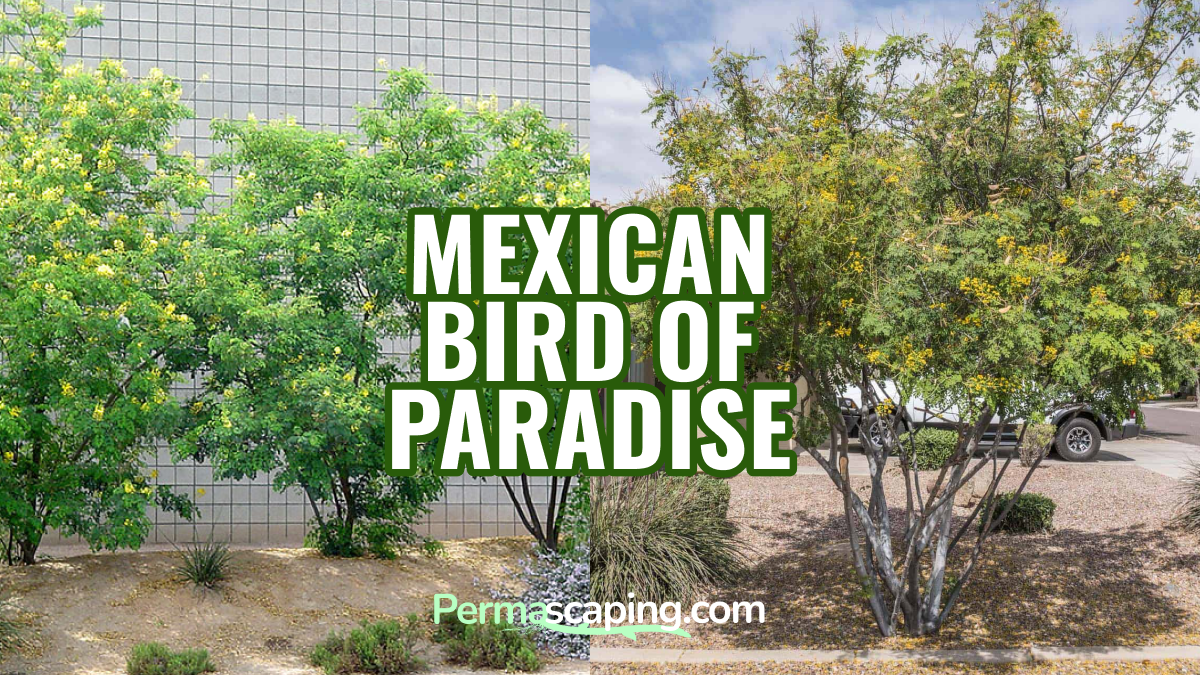
Mexican bird of paradise
Erythrostemon mexicanusA fast native-region shrub or small tree with ferny foliage and yellow flowers, useful for filtered shade, pollinators, and informal screens.
Right plant, right place
Will Mexican bird of paradise grow at your Arizona property?
Train as a multi-trunk small tree, leave as a broad shrub, or use in a loose hedge. It can grow 2–4 ft per year with regular water.
Best regional fit: Urban core · USDA 9b–10a, Valley suburbs · USDA 9a–9b, Desert outskirts · USDA 8b–9b.
Light
Sun exposure
Full sun to light shade; handles reflected heat after establishment.
Water
Irrigation
Low. Deep irrigation every 10–14 days in peak summer produces faster growth and fuller flowering.
Choose the actual plant, not only the label
Cultivars & selections
Common names cause confusion. Confirm Erythrostemon mexicanus: it is yellow-flowered and thornless, unlike the orange-red tropical bird of paradise and thorny red bird of paradise.
Mexican bird of paradise
Erythrostemon mexicanusMature size12–18 ft tall × 10–15 ft wide
Best forYellow flowers, filtered native-region canopy, and thornless screening
The intended species: yellow flowering, fine textured, and suitable for tree or shrub training.
Red bird of paradise
Erythrostemon gilliesiiMature size6–10 ft tall × 6–10 ft wide
Best forA smaller cold-hardy shrub with red stamens
A different, often thorny species with pale-yellow flowers and long red stamens. Do not substitute when a thornless Mexican bird is specified.
Tropical bird of paradise
Caesalpinia pulcherrimaMature size8–12 ft tall × 8–12 ft wide
Best forIntense orange-red summer flowers in warm sites
A frost-tender tropical species, not a cultivar of Mexican bird of paradise; it commonly freezes back and regrows in the Valley.
Planting & stewardship
How to help Mexican bird of paradise thrive
- 1
Verify the botanical name before purchase.
- 2
Choose shrub or tree form early and prune toward that architecture.
- 3
Deep-water through establishment, then extend the interval.
- 4
Leave enough flowering wood for bees and other pollinators.