

Native & adapted
Goodding’s verbena
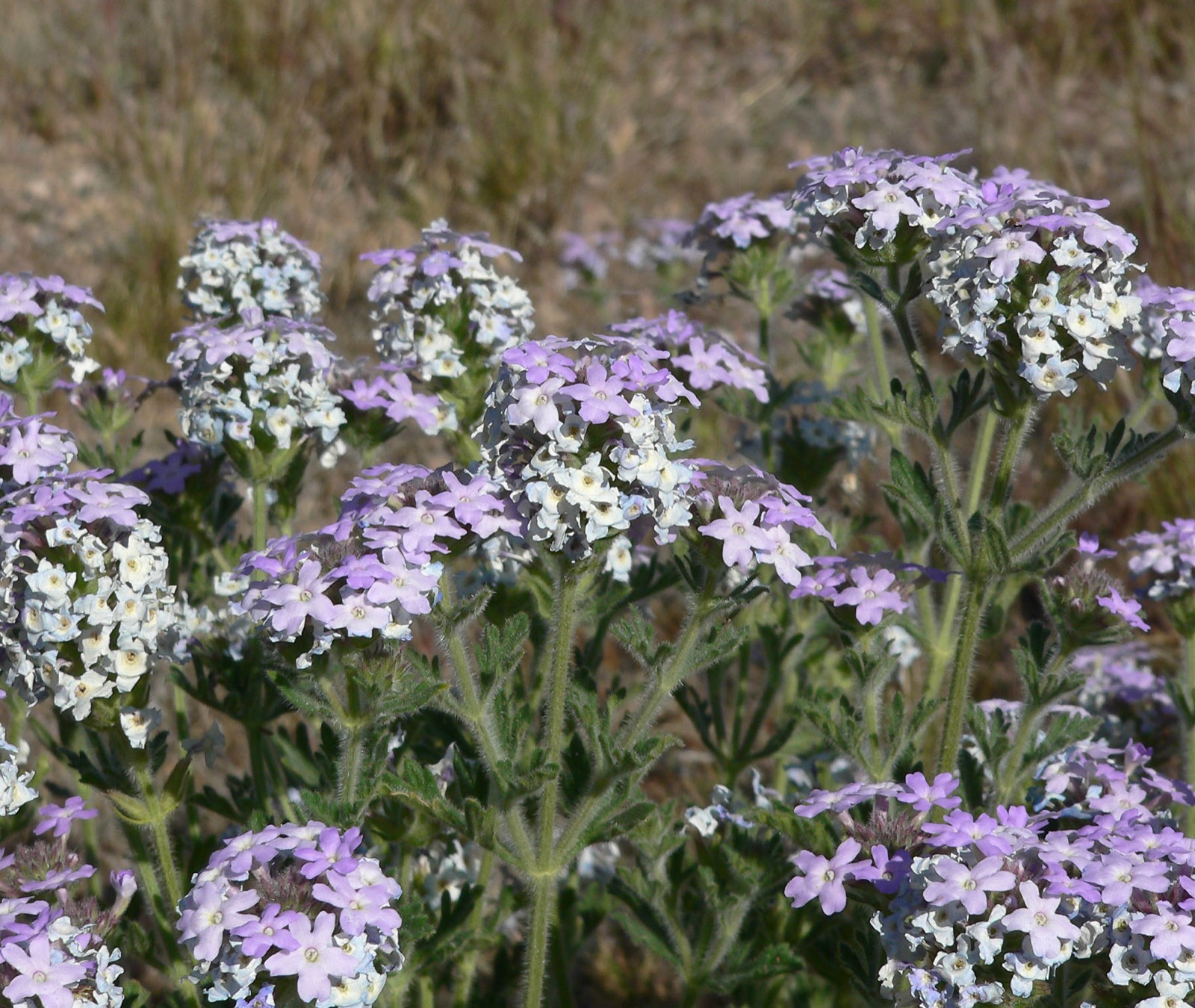
Glandularia gooddingiiAlso known as Goodding's verbena · Verbena gooddingii
A spreading Arizona verbena with lavender flower clusters that wakes up after rain and cool weather, feeding butterflies and native bees.
Right plant, right place
Will Goodding’s verbena grow at your Arizona property?
Use near paths, in pollinator beds, or along the upper edge of a basin. It may look sparse during drought or seasonal dormancy, then rebound quickly.
Best regional fit: Urban core · USDA 9b–10a, Valley suburbs · USDA 9a–9b, Desert outskirts · USDA 8b–9b, High desert · USDA 6a–8b.
Light
Sun exposure
Full sun to light shade.
Water
Irrigation
Low once established. Periodic deep irrigation can trigger a new flush of growth and flowers.
Planting & stewardship
How to help Goodding’s verbena thrive
- 1
Group several plants for a legible patch and leave gaps for natural reseeding.
- 2
Cut tired stems back after a bloom cycle instead of shearing constantly.
- 3
Keep the crown well drained and avoid daily irrigation.
- 4
Allow some seed to mature before cleanup if self-renewal is welcome.