

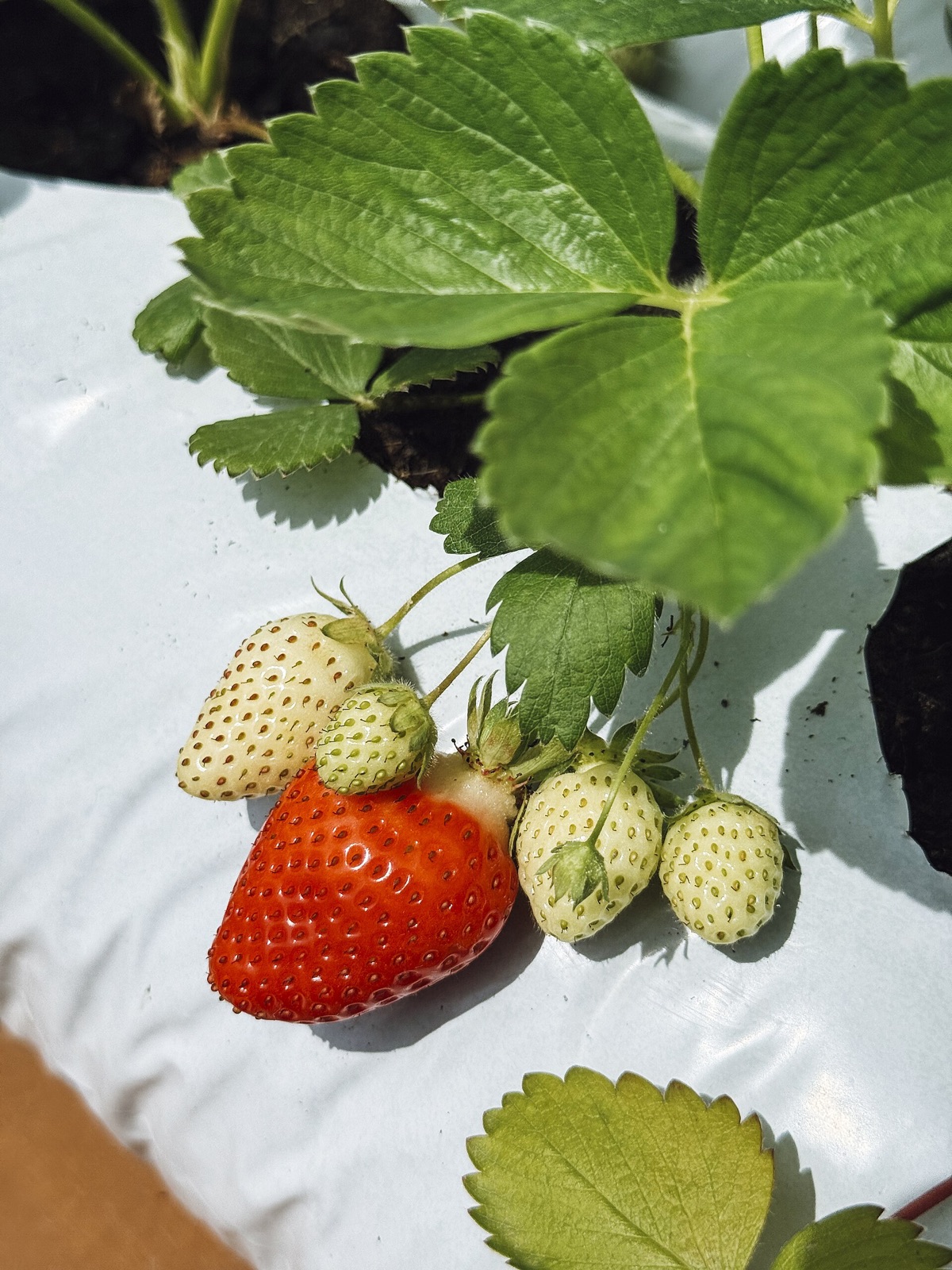
Native & adapted
Strawberry
Fragaria × ananassaAlso known as Garden strawberry
A fruiting ground layer for protected food gardens, most productive through the low desert's cool season and in cooler Arizona microclimates.
Right plant, right place
Will Strawberry grow at your Arizona property?
Use beside herbs and smaller fruit trees where irrigation can be managed separately. Protect ripening fruit from birds and avoid the hottest west-facing exposures.
Best regional fit: Urban core · USDA 9b–10a, Valley suburbs · USDA 9a–9b, Desert outskirts · USDA 8b–9b, High desert · USDA 6a–8b.
Light
Sun exposure
Morning sun with afternoon shade in the low desert; more sun is useful at elevation and in cool weather.
Water
Irrigation
Moderate and consistent while flowering and fruiting. Drip beneath foliage and keep the shallow root zone evenly moist, not saturated.
Fruit set
Pollination
Self-fertile flowers benefit from bee activity; several plants improve the harvest
Harvest
How to use it
Eat fresh, freeze, preserve, or let runners knit into an edible living mulch beneath compatible perennial crops.
Planting & stewardship
How to help Strawberry thrive
- 1
Plant crowns at soil level in fall for a low-desert spring crop, or after frost in colder regions.
- 2
Use clean straw or fine mulch beneath fruit while keeping the crown exposed.
- 3
Remove weak runners when fruit production is the priority; root selected runners when coverage is the goal.
- 4
Refresh beds when heat, crown disease, or declining vigor reduces production.