

Native & adapted
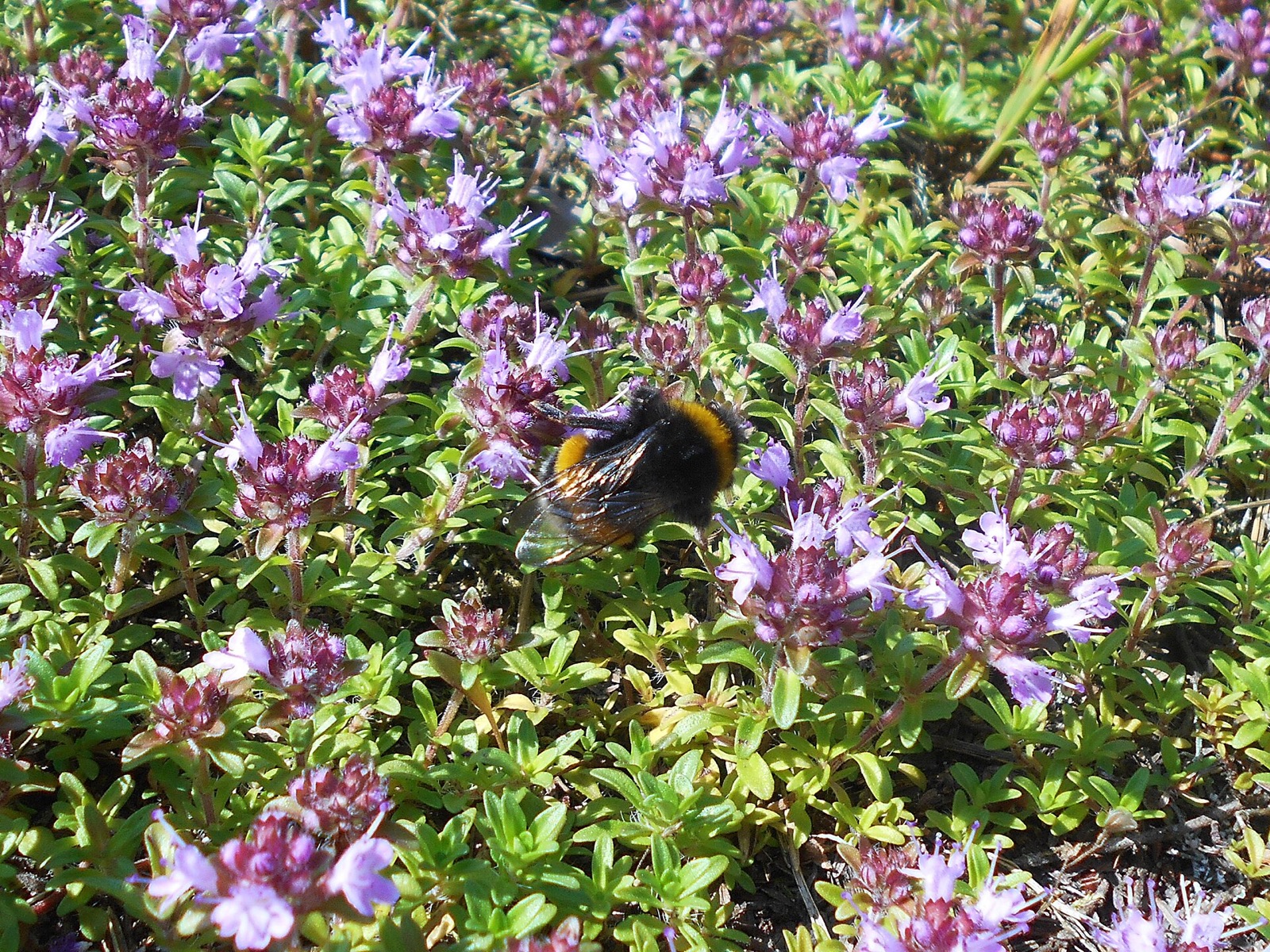
Creeping thyme
Thymus serpyllumAlso known as Wild thyme · Mother of thyme
A low, fragrant mat for stepping-stone joints and cool garden edges, best where desert heat is moderated by elevation or afternoon shade.
Right plant, right place
Will Creeping thyme grow at your Arizona property?
Best as a small-scale living joint filler, herb-garden edge, or high-desert groundcover—not as a broad replacement for lawn in reflected Phoenix heat.
Best regional fit: Valley suburbs · USDA 9a–9b, Desert outskirts · USDA 8b–9b, High desert · USDA 6a–8b.
Light
Sun exposure
Full sun in cooler climates; morning sun and afternoon shade in the Phoenix low desert.
Water
Irrigation
Moderate and regular in the low desert, with fast drainage. It is drought tolerant in cooler climates but not a zero-water Phoenix groundcover.
Harvest
How to use it
Use the aromatic leaves like other culinary thyme; avoid harvesting from paths exposed to pets or foot traffic.
Planting & stewardship
How to help Creeping thyme thrive
- 1
Tuck plants between stones or along edges where the crown stays dry and roots can reach cooler soil.
- 2
Provide afternoon shade below roughly 3,000 feet and watch closely during the first summer.
- 3
Trim lightly after flowering to keep the mat dense.
- 4
Replace irrigation frequency with deeper watering as roots establish, without letting plants remain soggy.