

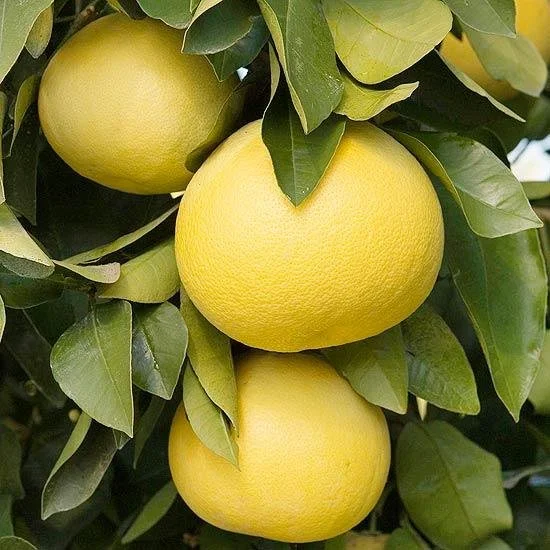
Wholesale citrus
Oro Blanco grapefruit hybrid
Citrus grandis × Citrus paradisi ‘Oro Blanco’Also known as Oroblanco · Sweetie grapefruit
A low-acid, high-sugar pummelo–grapefruit hybrid for growers who want a sweeter grapefruit character and thicker peel.
Check the current program →Right plant, right place
Will Oro Blanco grapefruit hybrid grow at your Arizona property?
Plant in fast-draining soil with the graft union above grade. Keep mulch away from the trunk and avoid lawn irrigation at the root crown.
Best regional fit: Urban core · USDA 9b–10a, Valley suburbs · USDA 9a–9b, Desert outskirts · USDA 8b–9b.
Light
Sun exposure
Full sun; young trunks and exposed scaffold limbs need sunburn protection
Water
Irrigation
Deep, regular irrigation with drying between cycles; expand the wetted zone as the canopy grows
Fruit set
Pollination
Self-fruitful
Harvest
How to use it
Fresh eating
Planting & stewardship
How to help Oro Blanco grapefruit hybrid thrive
- 1
Verify both the named cultivar and rootstock on the nursery tag before planting.
- 2
Whitewash newly exposed bark and protect cold-sensitive trees during hard freezes.
- 3
Feed in several light applications during the active season rather than one heavy dose.
- 4
Let fruit color and flavor—not a calendar date alone—confirm harvest readiness.
Seasonal availability
Find it through the community order.
Offered through Permascaping’s seasonal wholesale citrus preorder; exact sizes, rootstocks, and inventory change each year.