

Native & adapted
Mulberry
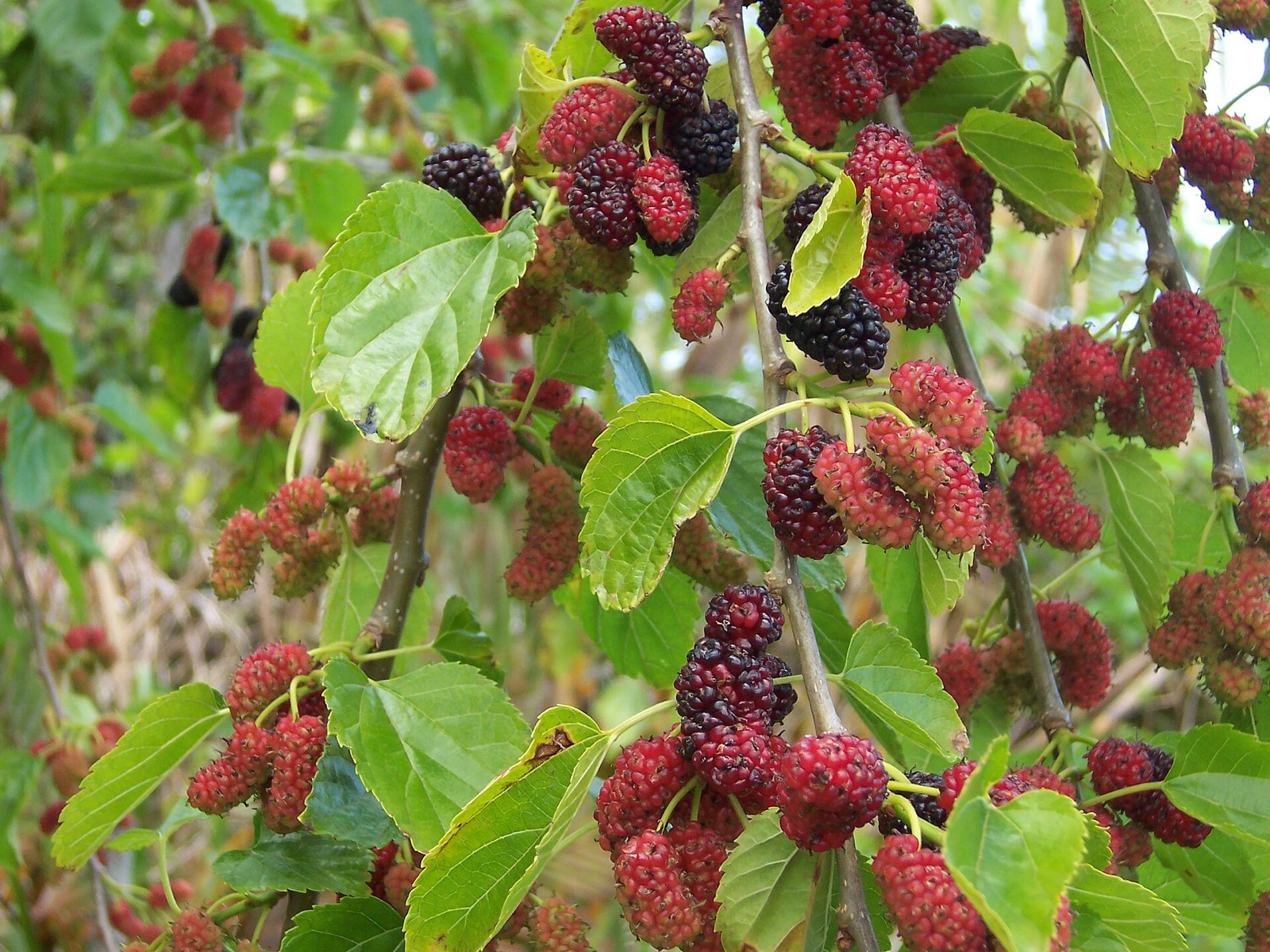
Morus alba cultivarsExceptional food and summer shade with moderate water; choose fruiting cultivars thoughtfully and allow ample space.
Right plant, right place
Will Mulberry grow at your Arizona property?
Use the whole site—not only the hardiness zone. Confirm mature width, reflected heat, seasonal shade, drainage, irrigation reach, and cold-air pockets before planting.
Best regional fit: Urban core · USDA 9b–10a, Valley suburbs · USDA 9a–9b, Desert outskirts · USDA 8b–9b, High desert · USDA 6a–8b.
Choose the actual plant, not only the label
Cultivars & selections
Buy a named fruiting selection. Fruit length, flavor, staining, final tree size, and sex vary widely among mulberries sold under the broad Morus alba label.
Pakistan
Morus macroura ‘Pakistan’Mature size20–35 ft tall × 25–35 ft wide
Best forVery long, sweet berries and fast summer shade
Produces dark red-to-black fruit that may reach several inches long. Vigorous and excellent in heat, but fruit stains hardscape.
Persian
Morus nigra selectionsMature size15–30 ft tall × 15–30 ft wide
Best forIntense berry flavor and a somewhat slower tree
Deeply flavored, dark fruit on a slower-growing tree. True M. nigra can be difficult to source, so verify the nursery’s identity.
Shangri-La
Morus alba ‘Shangri-La’Mature size20–30 ft tall × 20–30 ft wide
Best forLarge black fruit and broad leaves
Early-bearing, vigorous selection with large leaves and fruit; allow substantial canopy room.
Illinois Everbearing
Morus alba × rubra ‘Illinois Everbearing’Mature size20–35 ft tall × 20–35 ft wide
Best forExtended harvest and cold tolerance
Excellent-flavored dark fruit over a long season; more broadly useful in cooler and high-desert locations than Pakistan.
Planting & stewardship
How to help Mulberry thrive
- 1
Confirm the plant’s mature spread and underground conflicts before digging.
- 2
Place the root flare at finished grade and keep mulch away from the trunk.
- 3
Establish a wide, deep root zone instead of irrigating only at the trunk.
- 4
Observe seasonal growth, heat stress, and wildlife use before making major pruning changes.