

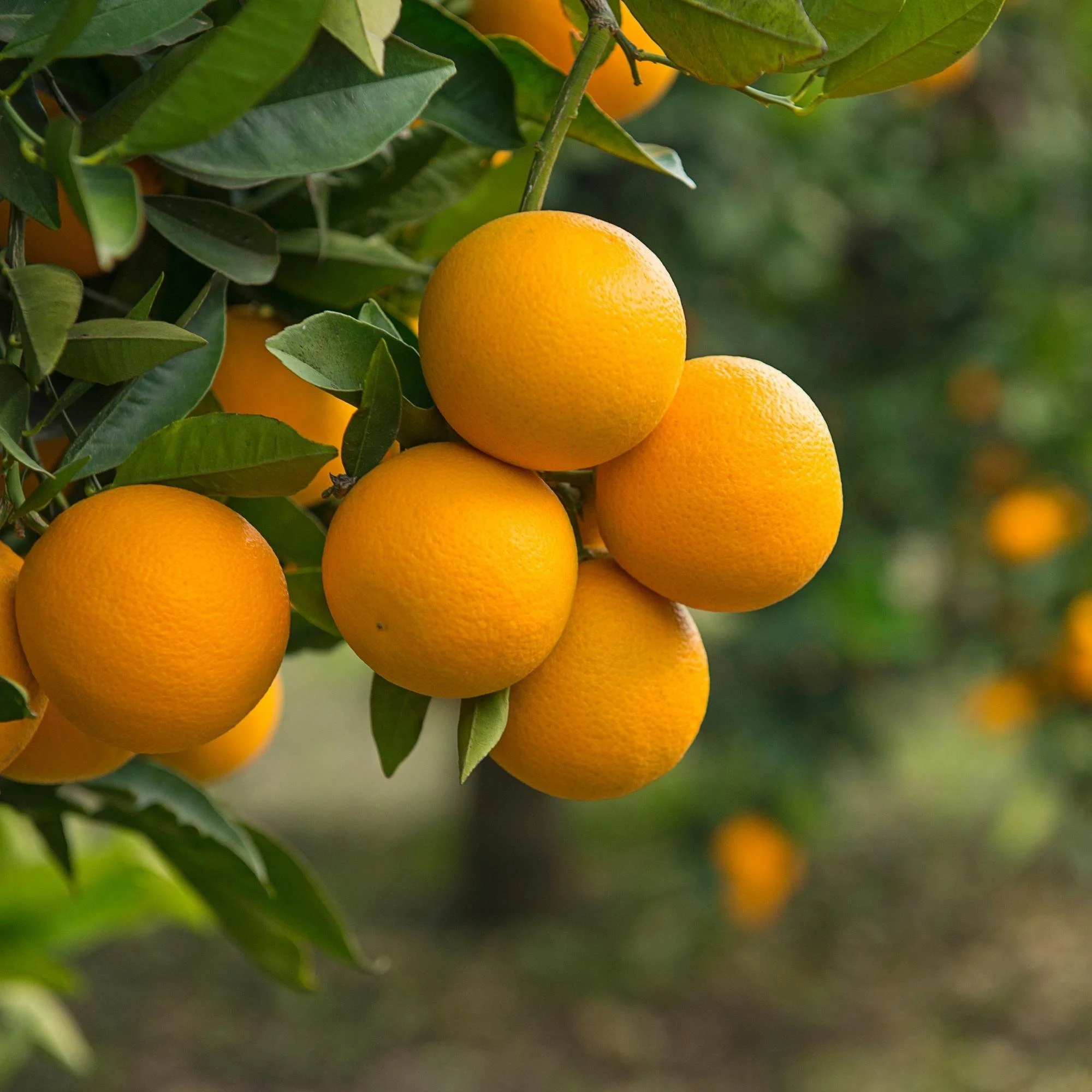
Wholesale citrus
Moro blood orange
Citrus sinensis ‘Moro’The darkest of the blood oranges: deep red to maroon flesh with a sweet, berry-like flavor. The color comes on with cool winter nights, so it is at its best in the Valley from midwinter into early spring.
Check the current program →Before you plant
These conditions determine whether it will thrive.
Zone A — morning sun, afternoon shade, at the east end of the sunnier south-facing side. Shields thin skin and variegated foliage from west sun, and gives blood oranges the cooler afternoons they need to color.
Right plant, right place
Will Moro blood orange grow at your Arizona property?
Plant in fast-draining soil with the graft union above grade. Keep mulch away from the trunk and avoid lawn irrigation at the root crown.
Best regional fit: Urban core · USDA 9b–10a, Valley suburbs · USDA 9a–9b, Desert outskirts · USDA 8b–9b.
Light
Sun exposure
Full sun; young trunks and exposed scaffold limbs need sunburn protection
Water
Irrigation
Deep, regular irrigation with drying between cycles; expand the wetted zone as the canopy grows
Fruit set
Pollination
Self-fruitful
Harvest
How to use it
Fresh eating, juice and cocktails
Planting & stewardship
How to help Moro blood orange thrive
- 1
Verify both the named cultivar and rootstock on the nursery tag before planting.
- 2
Whitewash newly exposed bark and protect cold-sensitive trees during hard freezes.
- 3
Feed in several light applications during the active season rather than one heavy dose.
- 4
Let fruit color and flavor—not a calendar date alone—confirm harvest readiness.