

Native & adapted
Chitalpa
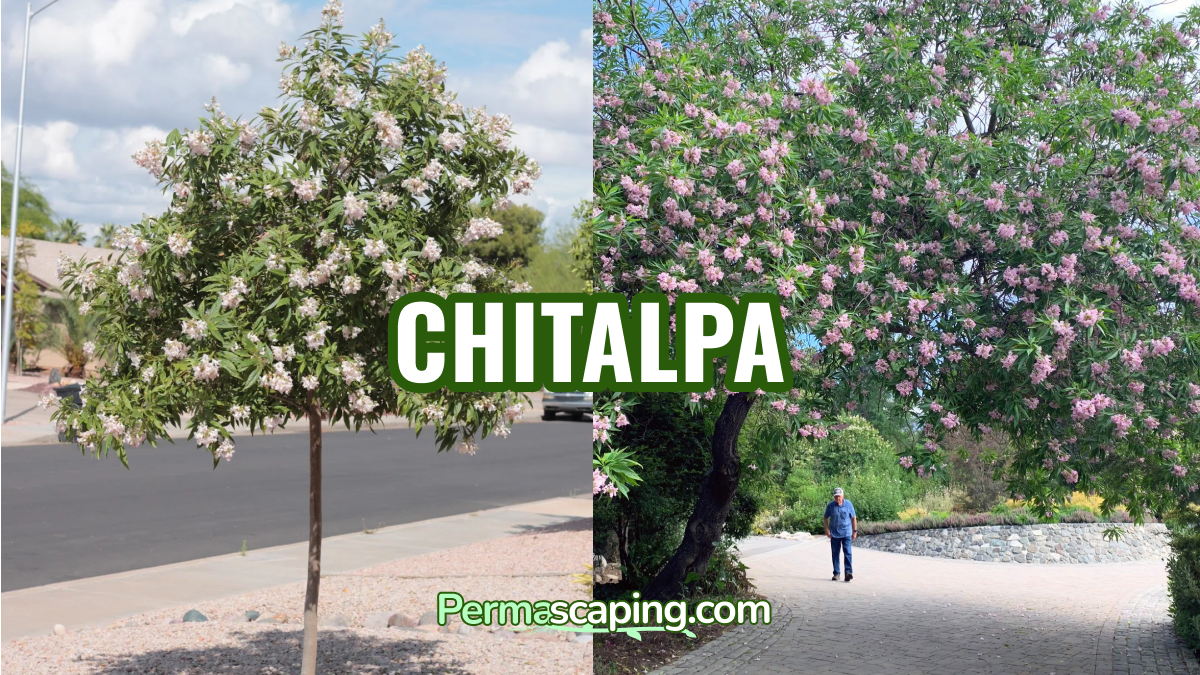
× Chitalpa tashkentensisA desert-willow hybrid with a broad flowering canopy; useful where a larger ornamental shade tree is desired.
Right plant, right place
Will Chitalpa grow at your Arizona property?
Use where a 20–30 ft flowering canopy fits. The tree grows quickly—often 2–4 ft per year—so early branch selection matters.
Best regional fit: Urban core · USDA 9b–10a, Valley suburbs · USDA 9a–9b, Desert outskirts · USDA 8b–9b, High desert · USDA 6a–8b.
Light
Sun exposure
Full sun for dense growth and flowering.
Water
Irrigation
Low to moderate. Deep irrigation about every 10–14 days in summer supports its fast growth and flower display.
Choose the actual plant, not only the label
Cultivars & selections
Named clones make flower color more predictable than seedling-grown material.
Pink Dawn
× Chitalpa tashkentensis ‘Pink Dawn’Mature size20–30 ft tall × 20–30 ft wide
Best forBroad flowering shade and pale pink blooms
The most familiar selection, with orchid-like pink flowers and a rounded canopy.
Morning Cloud
× Chitalpa tashkentensis ‘Morning Cloud’Mature size20–30 ft tall × 20–30 ft wide
Best forPaler near-white flowers
Similar landscape scale with white to very pale pink blooms; verify the clone at purchase because nursery labels can be inconsistent.
Planting & stewardship
How to help Chitalpa thrive
- 1
Confirm the plant’s mature spread and underground conflicts before digging.
- 2
Place the root flare at finished grade and keep mulch away from the trunk.
- 3
Establish a wide, deep root zone instead of irrigating only at the trunk.
- 4
Observe seasonal growth, heat stress, and wildlife use before making major pruning changes.