

Native & adapted
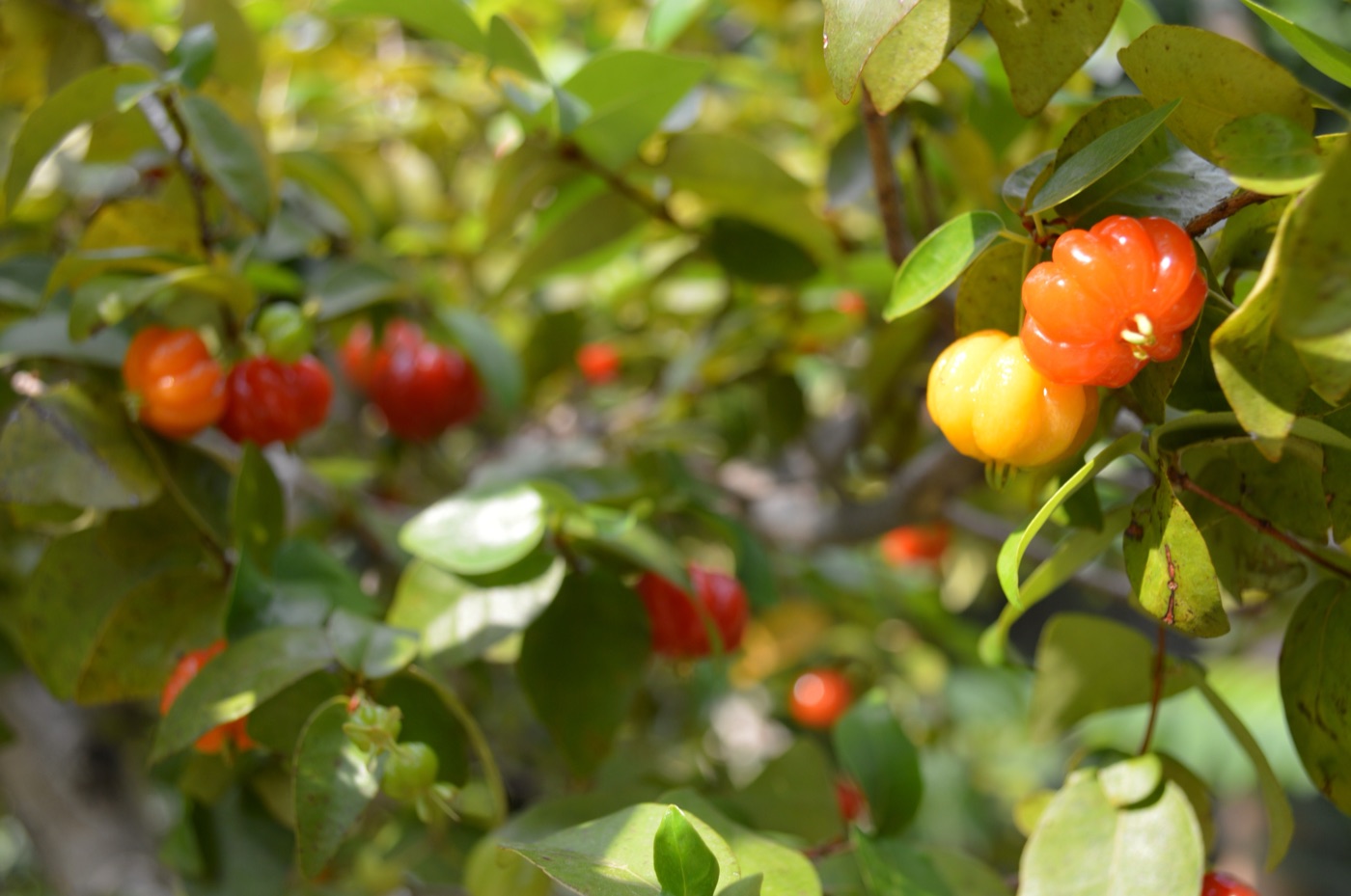
Surinam cherry
Eugenia unifloraAlso known as Pitanga · Brazilian cherry · Cayenne cherry
A fast, bushy shrub with ribbed red to near-black fruit that is sweet and resinous. A heavy producer and a handsome edible hedge.
Before you plant
These conditions determine whether it will thrive.
Tolerates soil from about pH 5.5 to 7.5; add compost and soil sulfur in Phoenix.
East side of a wall, or under the edge of a larger tree.
Right plant, right place
Will Surinam cherry grow at your Arizona property?
Fruits in 2 to 3 years. Prunes well into a hedge or a small tree.
Best regional fit: Urban core · USDA 9b–10a, Valley suburbs · USDA 9a–9b.
Light
Sun exposure
Morning sun with afternoon shade in summer.
Water
Irrigation
Moderate. Deep water once or twice a week in summer.
Fruit set
Pollination
Self-fertile.
Harvest
How to use it
Fresh when fully dark red, or in jams and sauces. Underripe fruit tastes of resin.
Planting & stewardship
How to help Surinam cherry thrive
- 1
Let fruit ripen to deep red or near black before picking.
- 2
Shade from afternoon sun when it is hot.
- 3
Prune after fruiting to shape.
- 4
Cover young plants on frost nights.