

Native & adapted
Pineapple guava
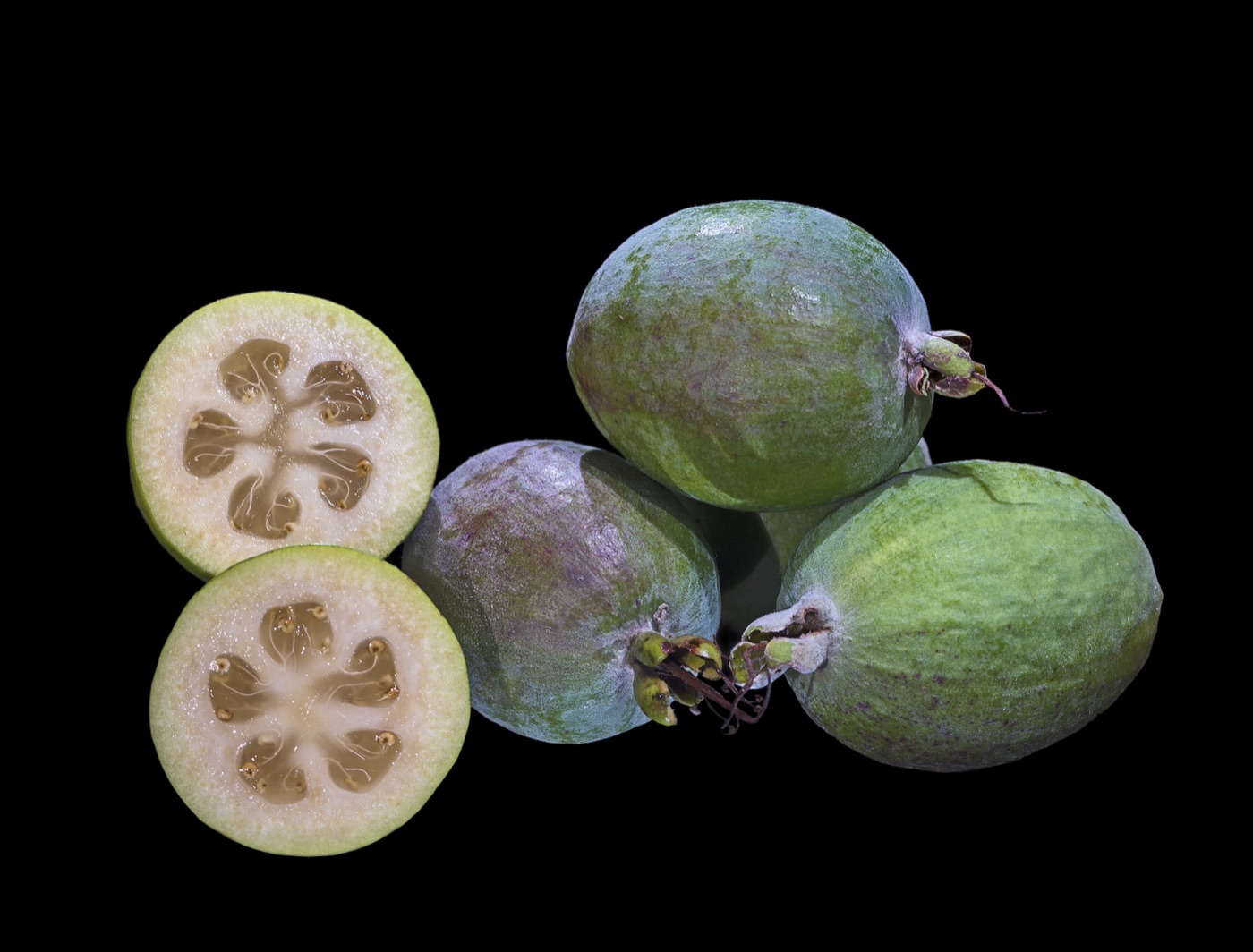
Feijoa sellowianaAlso known as Feijoa · Guavasteen · Acca sellowiana
A tough evergreen shrub with silver-backed leaves, edible flower petals and aromatic green fruit in fall. Cold hardy but needs afternoon shade in Phoenix summers.
Before you plant
These conditions determine whether it will thrive.
Fast-draining soil with compost; tolerates mildly alkaline soil.
East or north side of the house, or under the edge of a larger tree.
Right plant, right place
Will Pineapple guava grow at your Arizona property?
Makes a useful edible hedge or screen. Grafted named varieties give larger fruit.
Best regional fit: Urban core · USDA 9b–10a, Valley suburbs · USDA 9a–9b, Desert outskirts · USDA 8b–9b, High desert · USDA 6a–8b.
Light
Sun exposure
Morning sun with afternoon shade in summer. Reflected west heat scorches leaves and drops fruit.
Water
Irrigation
Moderate. Deep water once a week in summer.
Fruit set
Pollination
Partly self-fertile; a second variety greatly improves the crop. Birds and bees work the flowers.
Harvest
How to use it
Scoop the fragrant flesh fresh, or use in jams, smoothies and baking. The fleshy petals are sweet.
Planting & stewardship
How to help Pineapple guava thrive
- 1
Plant two varieties for a reliable crop.
- 2
Mulch and shade from afternoon sun in summer.
- 3
Prune lightly after harvest to shape.
- 4
Collect fallen fruit and ripen on the counter for a day or two.