

Native & adapted
Papaya
Carica papayaAlso known as Pawpaw · Papaw · Fruta bomba · Đu đủ
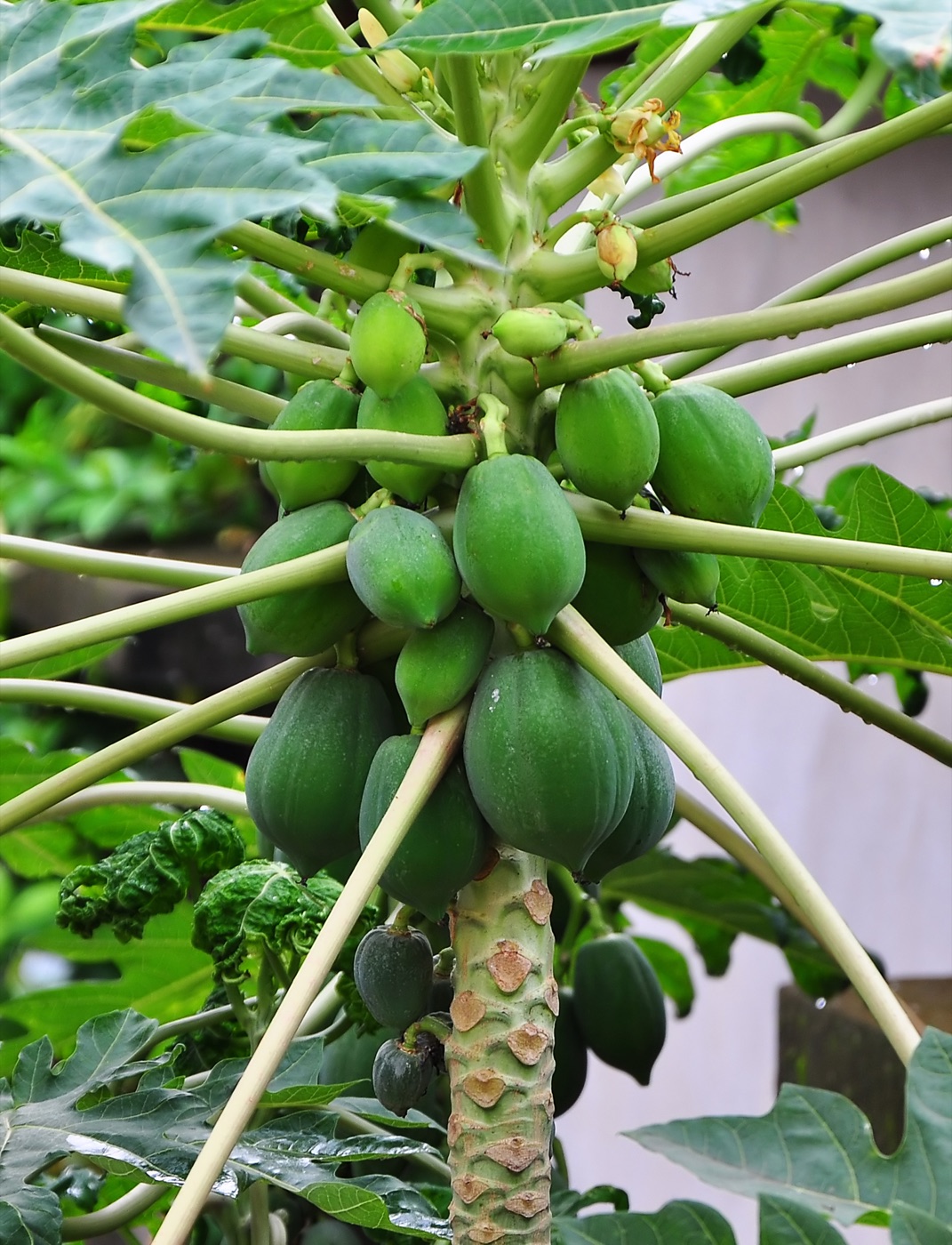
A fast, single-trunk plant that can fruit within a year. Heavy producers in Phoenix if protected from frost and given afternoon shade while young.
Before you plant
These conditions determine whether it will thrive.
Very fast-draining soil, mounded if needed. Feed every few weeks in the warm season.
Warmest, most sheltered spot with overhead frost protection.
Right plant, right place
Will Papaya grow at your Arizona property?
Short-lived; plan to replace every 3 to 4 years. Plant in ground rather than a pot for better crops.
Best regional fit: Urban core · USDA 9b–10a, Valley suburbs · USDA 9a–9b.
Light
Sun exposure
Afternoon shade while young; older plants handle more sun.
Water
Irrigation
Moderate. Water deeply when the top few inches dry. Soggy soil rots the roots, especially in winter.
Fruit set
Pollination
Some plants are male, female or self-fertile. Self-fertile (bisexual) types such as Solo or Red Lady guarantee fruit from one plant.
Harvest
How to use it
Ripe fruit fresh; green fruit shredded for salads and cooked dishes.
Planting & stewardship
How to help Papaya thrive
- 1
Feed lightly and often from April to October.
- 2
Let the soil dry slightly between waterings.
- 3
Cover the plant and wrap the trunk on frost nights.
- 4
Remove male plants if more than one is growing and you need space.