

Native & adapted
Natal plum
Carissa macrocarpaAlso known as Carissa · Amatungulu
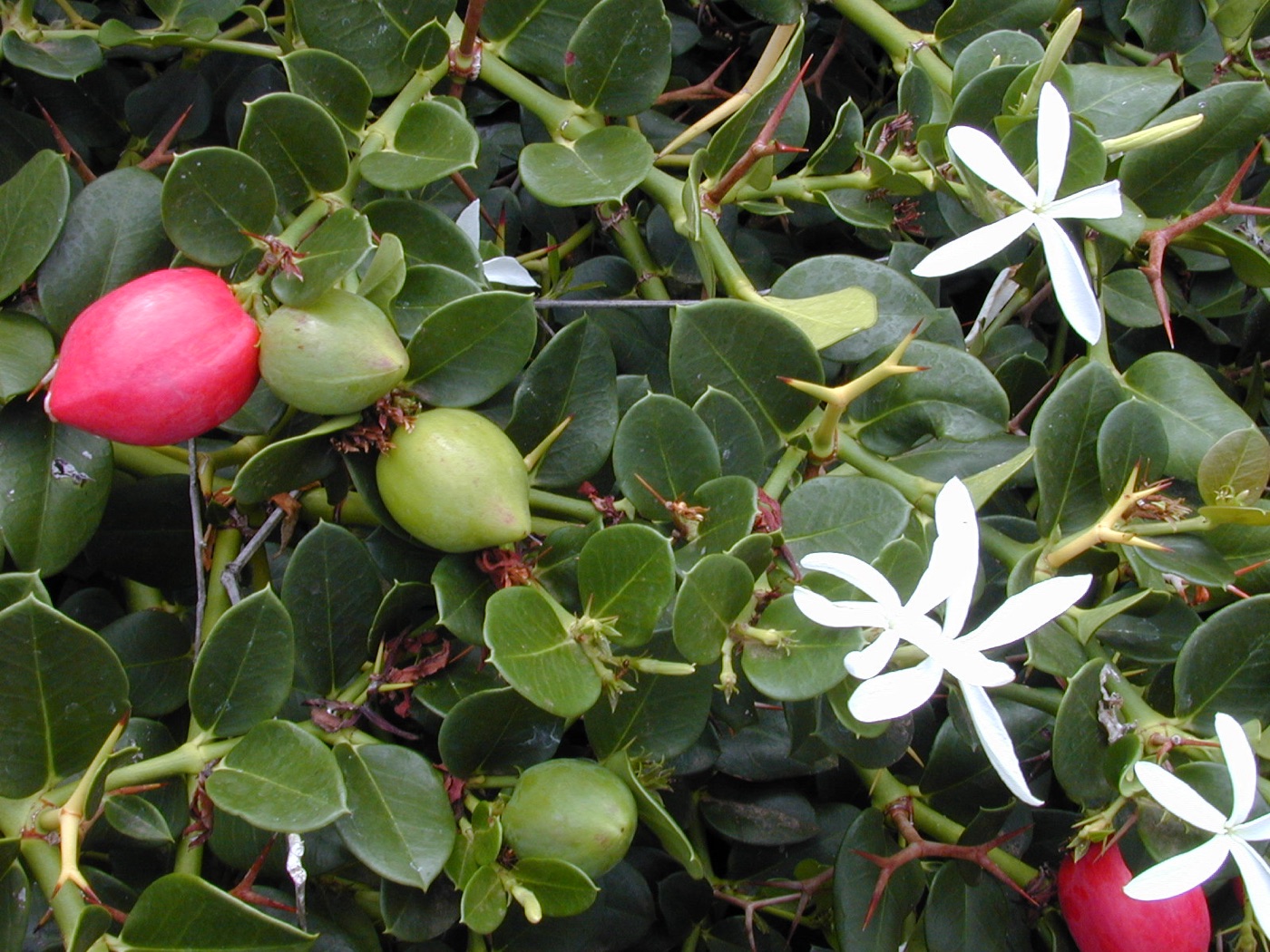
A common Phoenix landscape shrub with glossy leaves, fragrant white star flowers and edible red fruit. Thorny, salt tolerant and easy.
Before you plant
These conditions determine whether it will thrive.
Tolerates alkaline, sandy and salty soil.
Hedges, foundation plantings and patio edges.
Right plant, right place
Will Natal plum grow at your Arizona property?
Dwarf forms are often used as groundcover or low hedges. The milky sap and thorns can irritate skin.
Best regional fit: Urban core · USDA 9b–10a, Valley suburbs · USDA 9a–9b, Desert outskirts · USDA 8b–9b.
Light
Sun exposure
Full sun to part shade; afternoon shade in the hottest spots.
Water
Irrigation
Low to moderate. Deep water weekly in summer.
Fruit set
Pollination
Mostly self-fertile; hand pollinating or a second plant improves fruit set. Moths visit the night-scented flowers.
Harvest
How to use it
Ripe fruit tastes like a tart cranberry; eat fresh or make sauce and jelly. Only the ripe fruit is edible.
Planting & stewardship
How to help Natal plum thrive
- 1
Prune to shape; sheared hedges flower and fruit less.
- 2
Wear gloves; the forked spines are sharp.
- 3
Water deeply and infrequently once established.
- 4
Cover in hard freezes below about 26°F.