

Native & adapted
Ceylon gooseberry
Dovyalis hebecarpaAlso known as Ketembilla · Kitembilla · Tropical apricot
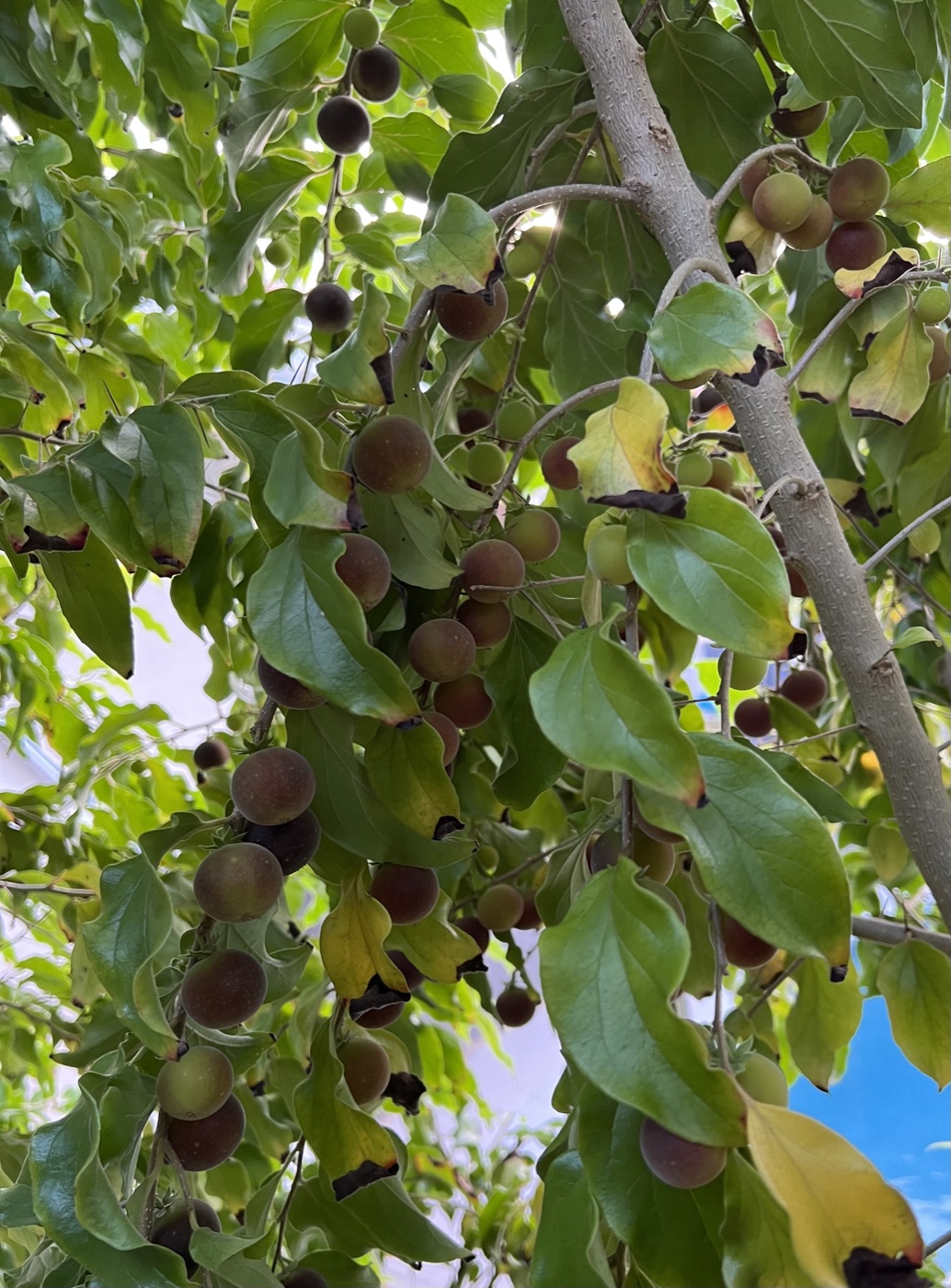
A thorny shrub with velvety maroon fruit that tastes tart and fruity, like a sour plum. Useful as an edible security hedge.
Before you plant
These conditions determine whether it will thrive.
Tolerates many soils if they drain; add compost.
Sunny boundary or fence line with some frost protection.
Right plant, right place
Will Ceylon gooseberry grow at your Arizona property?
Sharp spines make it a strong barrier hedge. Keep it away from walkways.
Best regional fit: Urban core · USDA 9b–10a, Valley suburbs · USDA 9a–9b.
Light
Sun exposure
Full sun to afternoon shade.
Water
Irrigation
Moderate. Deep water once or twice a week in summer.
Fruit set
Pollination
Plants are usually male or female; a female needs a male nearby. Some hybrid selections fruit alone.
Harvest
How to use it
Fresh when fully ripe, or made into jam, jelly and syrup.
Planting & stewardship
How to help Ceylon gooseberry thrive
- 1
Plant a male nearby or choose a self-fruitful hybrid.
- 2
Wear thick gloves when pruning.
- 3
Cover young plants on frost nights.
- 4
Prune after fruiting to keep the hedge dense.