

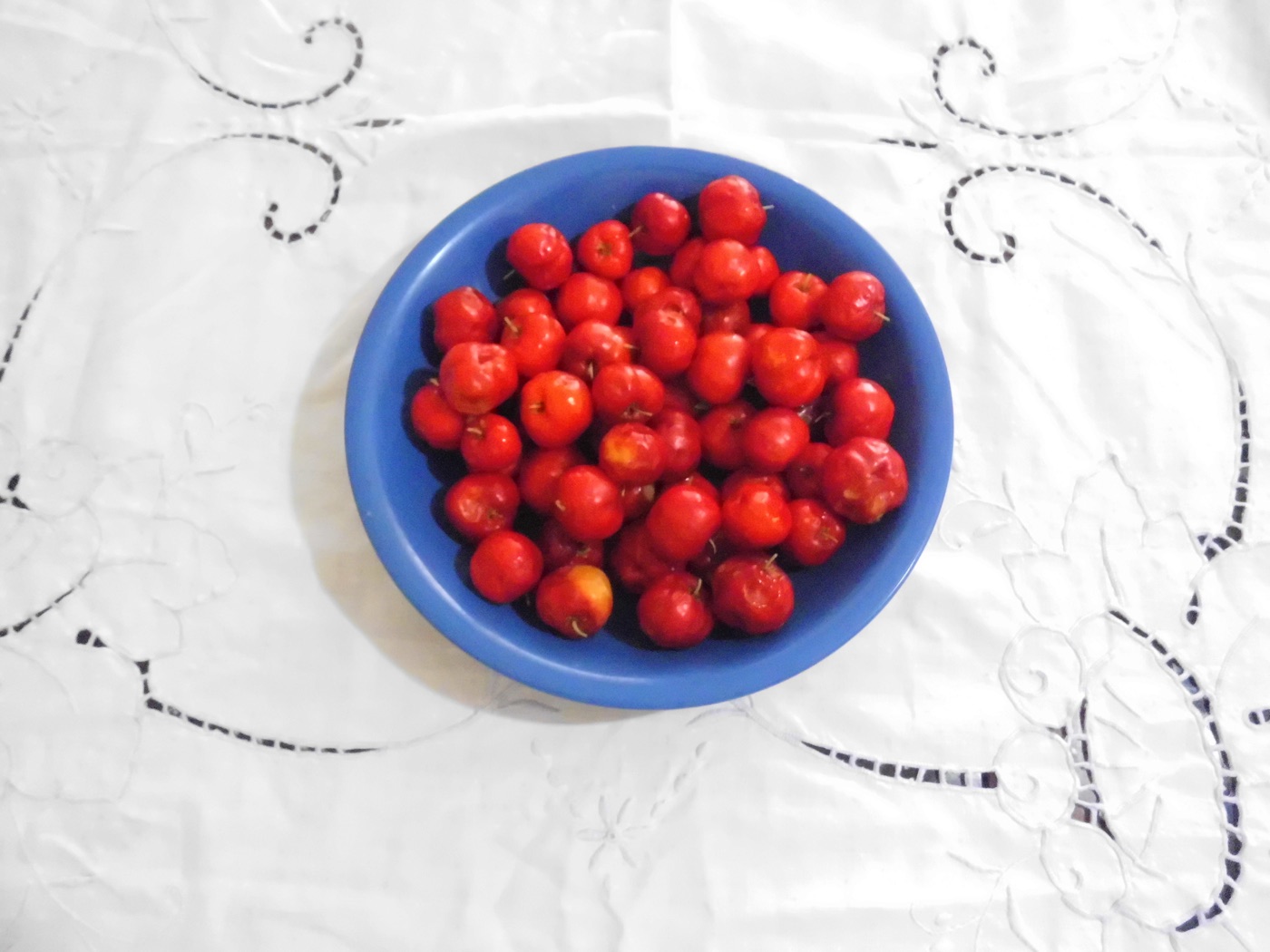
Native & adapted
Barbados cherry
Malpighia emarginataAlso known as Acerola · West Indian cherry · Malpighia glabra
A bushy shrub that fruits in flushes for much of the warm season. Its bright red cherries are among the richest sources of vitamin C of any fruit.
Before you plant
These conditions determine whether it will thrive.
Fast-draining soil rich in compost. Phoenix soil is alkaline, so work in soil sulfur and organic matter and use chelated iron if new leaves turn yellow between the veins.
East-facing bed or edge of a nurse tree canopy, protected from frost.
Right plant, right place
Will Barbados cherry grow at your Arizona property?
Works as an edible hedge or a small standard tree. Fruit is soft and spoils quickly after picking.
Best regional fit: Urban core · USDA 9b–10a, Valley suburbs · USDA 9a–9b.
Light
Sun exposure
Full sun to afternoon shade. Afternoon shade in midsummer keeps fruit from scorching.
Water
Irrigation
Moderate. Deep water once or twice a week in summer.
Fruit set
Pollination
Partly self-fertile; two plants set more fruit. Native bees visit the pink flowers.
Harvest
How to use it
Fresh, juiced, or made into jelly. Freezes well without losing vitamin C.
Planting & stewardship
How to help Barbados cherry thrive
- 1
Feed lightly every 6 to 8 weeks from spring to fall.
- 2
Mulch to keep roots cool and moist.
- 3
Prune to shape after a fruit flush.
- 4
Cover on frost nights.