

Native & adapted
Banana
Musa species and hybridsAlso known as Banana tree · Plantain · Chuối
Fast, lush and surprisingly productive in Phoenix when fed heavily and given afternoon shade. Frost burns the leaves, but the roots regrow each spring.
Before you plant
These conditions determine whether it will thrive.
Rich, fast-draining soil with lots of compost. Feed heavily during the warm months.
Sheltered from wind and frost, ideally in a courtyard or against an east or north wall with overhead cover.
Right plant, right place
Will Banana grow at your Arizona property?
Choose cold-tolerant varieties such as Ice Cream (Blue Java), Raja Puri or Dwarf Orinoco for the best odds of a crop before frost.
Best regional fit: Urban core · USDA 9b–10a, Valley suburbs · USDA 9a–9b.
Light
Sun exposure
Morning sun with afternoon shade in summer. Plants in full west sun shred and scorch.
Water
Irrigation
High in summer: water deeply two to three times a week. Very little in winter, when cold wet roots rot.
Fruit set
Pollination
Not needed; edible bananas set fruit without pollination.
Harvest
How to use it
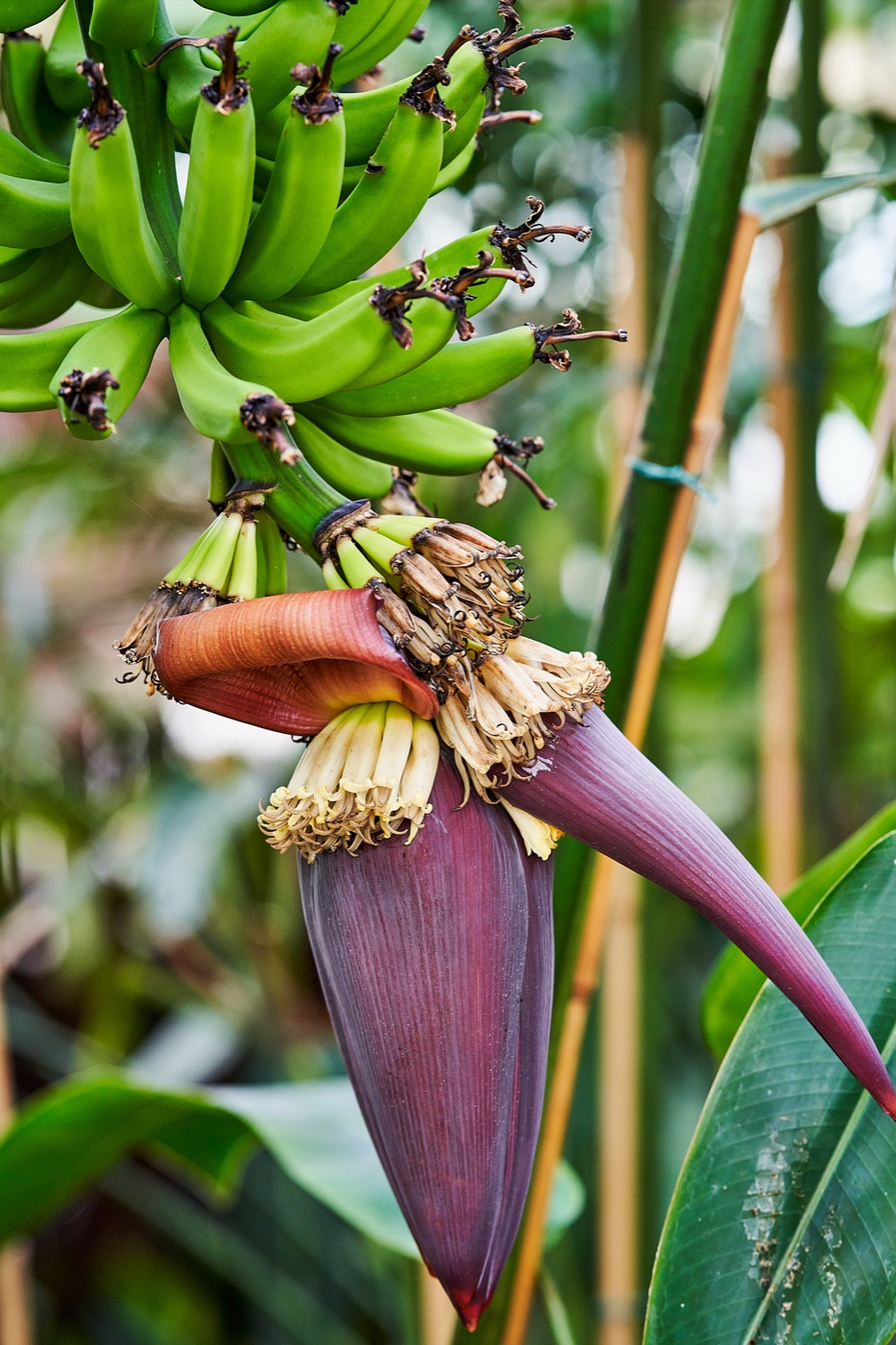
Fresh dessert bananas, or cooking types and plantains for frying and baking.
Planting & stewardship
How to help Banana thrive
- 1
Feed with a high-potassium fertilizer or compost every month from April to September.
- 2
Keep three or four stems per clump and remove extra pups.
- 3
Cut each stem down after it fruits; it will not fruit again.
- 4
Leave frost-burned leaves on until spring as insulation, then trim.