

Native & adapted
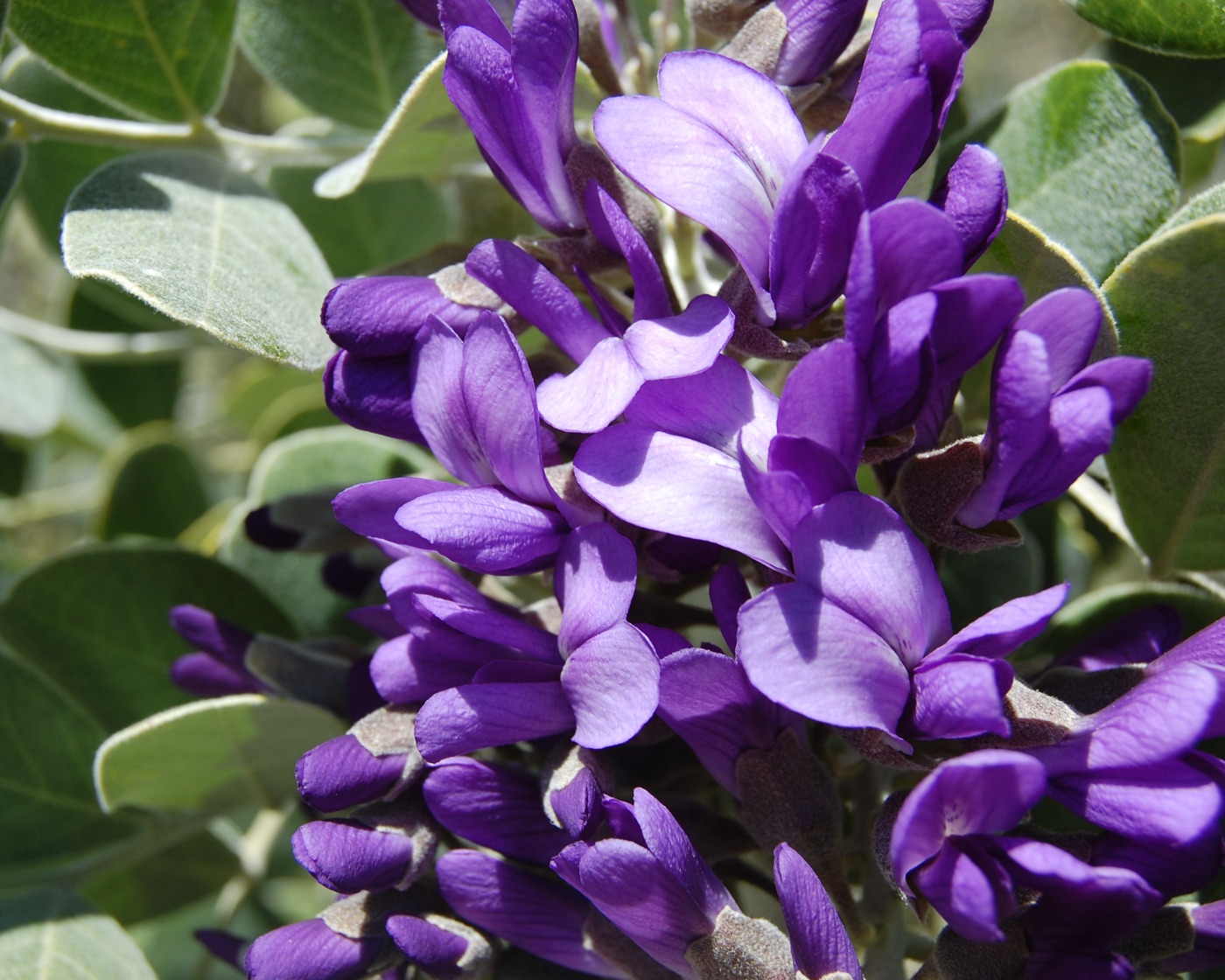
Texas mountain laurel
Dermatophyllum secundiflorumAlso known as Mescal bean · Sophora secundiflora · Calia secundiflora
A slow, tidy evergreen with glossy leaves and purple flower clusters in late winter that smell like grape soda. One of the toughest small trees for a hot Phoenix yard.
Before you plant
These conditions determine whether it will thrive.
Fast-draining soil; tolerates rocky, alkaline and caliche-rich ground.
Any exposure. Works well near patios and entries where the spring flowers can be smelled.
Right plant, right place
Will Texas mountain laurel grow at your Arizona property?
Grows slowly, so start with the largest plant budget allows. Can be trained as a multi-trunk small tree or left as a large shrub.
Best regional fit: Urban core · USDA 9b–10a, Valley suburbs · USDA 9a–9b, Desert outskirts · USDA 8b–9b, High desert · USDA 6a–8b.
Light
Sun exposure
Full sun to light shade; handles reflected heat once established.
Water
Irrigation
Low. Deep water every 2 to 3 weeks in summer once established.
Fruit set
Pollination
Bees work the flowers from February to April.
Harvest
How to use it
Not edible. The bright red seeds are poisonous, so keep pods away from children and pets.
Planting & stewardship
How to help Texas mountain laurel thrive
- 1
Water deeply and infrequently; it dislikes constantly wet roots.
- 2
Prune lightly after flowering to raise the canopy into a small tree.
- 3
Watch for genista caterpillars in spring and summer; pick them off or use Bt.
- 4
Collect and discard seed pods where children play.