

Native & adapted
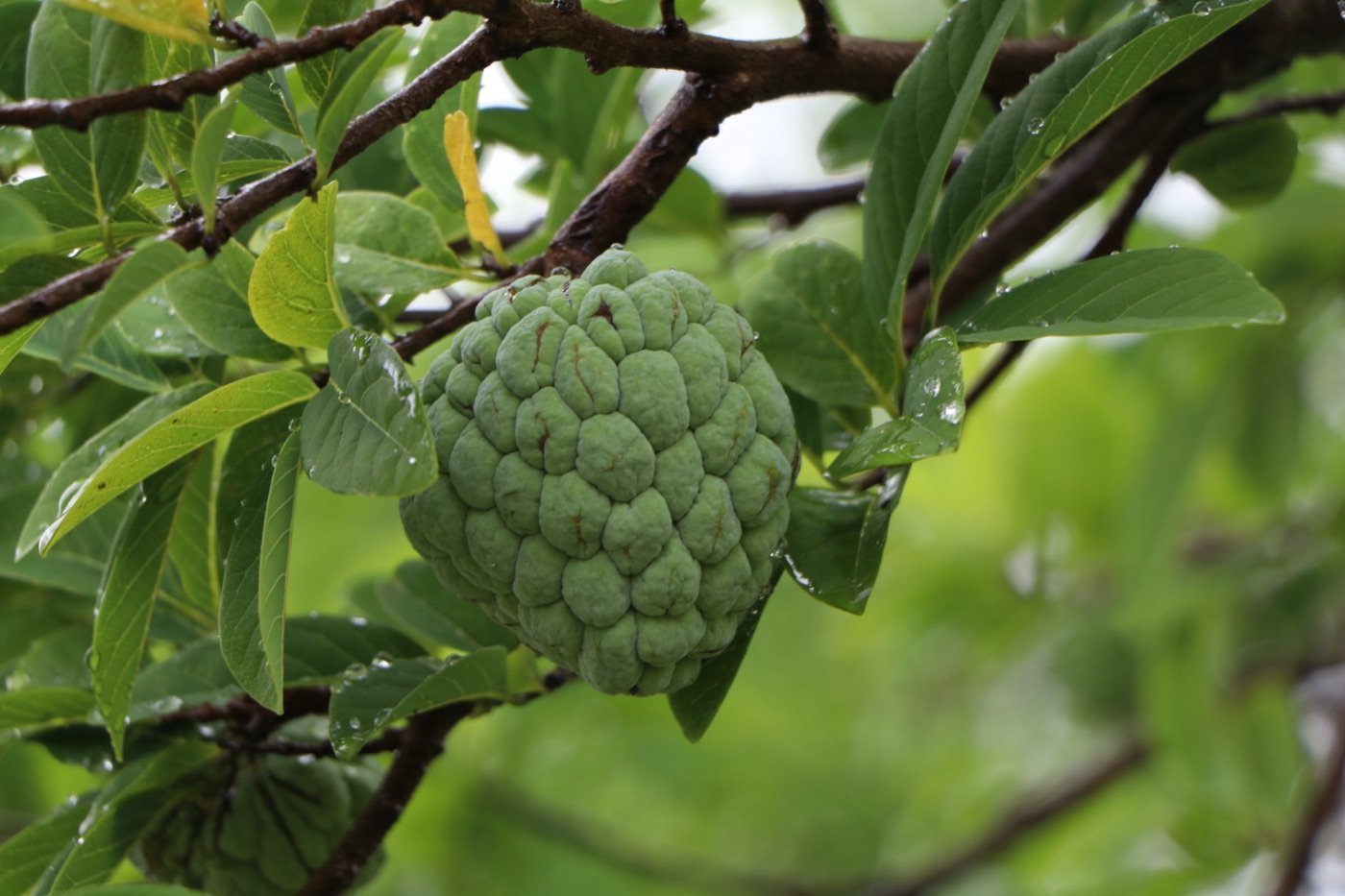
Sugar apple
Annona squamosaAlso known as Sweetsop · Custard apple · Sitaphal · Mãng cầu na
A small tree with knobby green fruit full of sweet, custardy segments. Loves heat but needs frost protection and afternoon shade.
Before you plant
These conditions determine whether it will thrive.
Fast-draining soil rich in compost. Phoenix soil is alkaline, so work in soil sulfur and organic matter and use chelated iron if new leaves turn yellow between the veins.
Warm, sheltered spot with afternoon shade and frost cover.
Right plant, right place
Will Sugar apple grow at your Arizona property?
Often sold simply as custard apple. Fruits within 2 to 3 years.
Best regional fit: Urban core · USDA 9b–10a, Valley suburbs · USDA 9a–9b.
Light
Sun exposure
Morning sun with afternoon shade from June through September, such as the east side of a house or under a taller nurse tree. Protect from frost on winter nights.
Water
Irrigation
Moderate in the growing season; light in winter, when it rests.
Fruit set
Pollination
Self-fertile, but hand pollination improves fruit set.
Harvest
How to use it
Pull apart and eat the sweet segments fresh. Seeds are toxic.
Planting & stewardship
How to help Sugar apple thrive
- 1
Hand pollinate flowers with a brush for a bigger crop.
- 2
Cut watering back while it is leafless in winter.
- 3
Cover with frost cloth on nights below 32°F.
- 4
Prune lightly in late winter.