

Native & adapted
Star gooseberry
Phyllanthus acidusAlso known as Otaheite gooseberry · Tahitian gooseberry · Malay gooseberry · Grosella
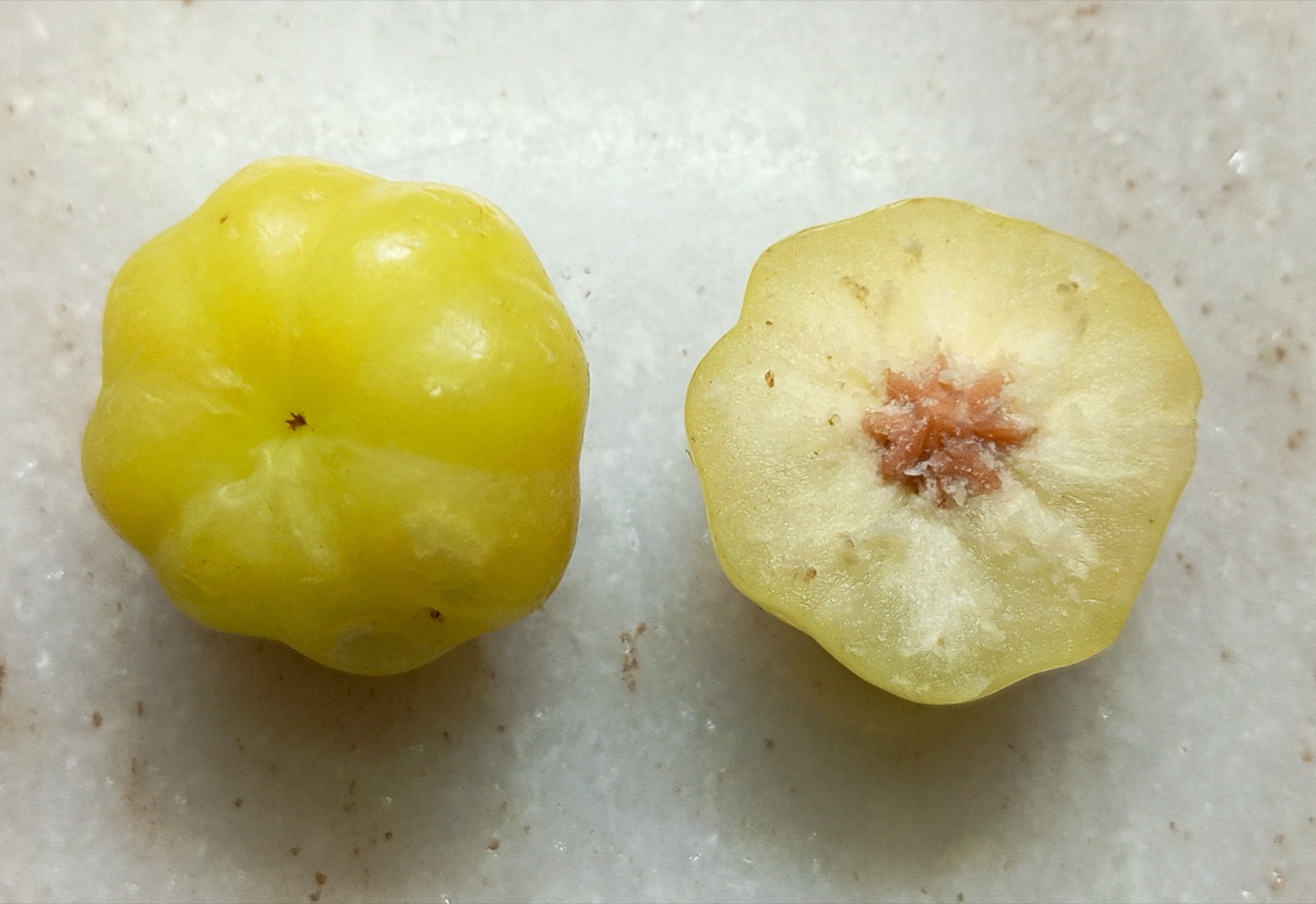
A small tropical tree that bears dense clusters of ribbed, pale yellow fruit along its branches. Sour and refreshing, and best grown in a large pot in Phoenix.
Before you plant
These conditions determine whether it will thrive.
Fertile, fast-draining soil rich in compost.
Large container that can move under cover on cold nights.
Right plant, right place
Will Star gooseberry grow at your Arizona property?
Rare in Arizona. Treat as a patio container plant.
Best regional fit: Urban core · USDA 9b–10a.
Light
Sun exposure
Afternoon shade or filtered sun all day.
Water
Irrigation
Moderate and steady.
Fruit set
Pollination
Self-fertile.
Harvest
How to use it
Very sour; eaten with salt, pickled, or cooked into jam and syrup.
Planting & stewardship
How to help Star gooseberry thrive
- 1
Shade from afternoon sun.
- 2
Move under cover when nights drop below 40°F.
- 3
Feed lightly every 6 to 8 weeks in the warm season.
- 4
Keep soil evenly moist.