

Native & adapted
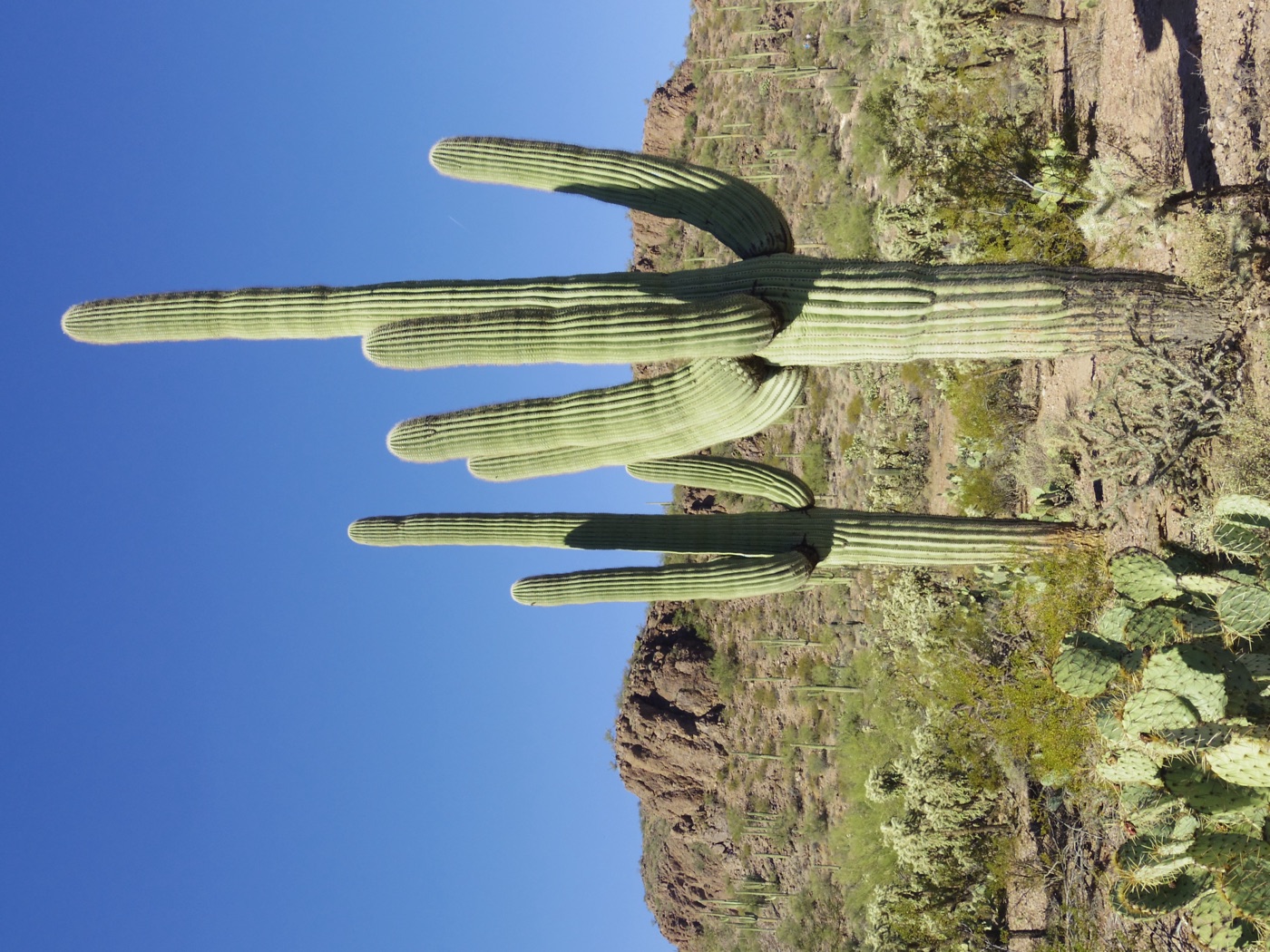
Saguaro
Carnegiea giganteaAlso known as Saguaro cactus · Giant saguaro
The signature cactus of the Sonoran Desert. It grows very slowly, feeds bats, birds and bees with its flowers and fruit, and needs almost nothing once settled except good drainage.
Before you plant
These conditions determine whether it will thrive.
Rocky or sandy, fast-draining native soil. Never plant in a low spot where water collects.
Open, sunny ground with good drainage. Keep it away from lawn sprinklers and drip lines.
Right plant, right place
Will Saguaro grow at your Arizona property?
Protected by Arizona law. Moving, buying or removing one needs a state tag and permit. Mark which side faced south and plant it the same way to avoid sunburn.
Best regional fit: Urban core · USDA 9b–10a, Valley suburbs · USDA 9a–9b, Desert outskirts · USDA 8b–9b.
Light
Sun exposure
Full sun once established. Young saguaros grow best under a nurse tree such as palo verde or mesquite.
Water
Irrigation
Very low. A transplant gets a deep soak every 2 to 3 weeks in its first summer, then rain alone is usually enough. Overwatering causes rot and splitting.
Fruit set
Pollination
Night-flying bats, plus bees and white-winged doves by day.
Harvest
How to use it
The red pulp is eaten fresh or cooked into syrup and jam; the seeds are ground into a meal.
Planting & stewardship
How to help Saguaro thrive
- 1
Keep the original south face pointing south when transplanting.
- 2
Water sparingly, only in the warm season, and stop if the skin looks swollen.
- 3
Leave the nurse tree in place; it protects young saguaros from frost and sun.
- 4
Do not fertilize or prune.