

Native & adapted
Passion fruit
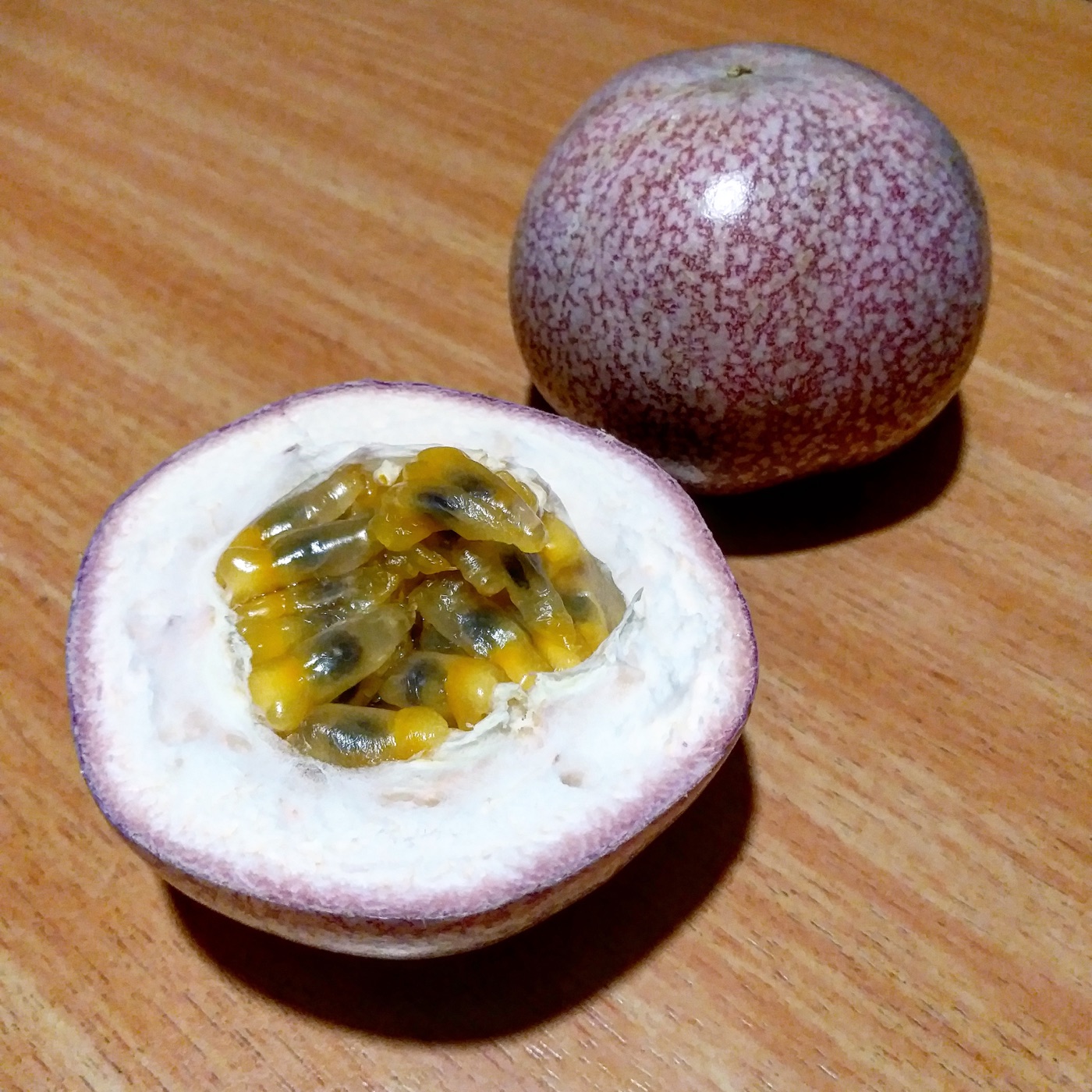
Passiflora edulisAlso known as Passionfruit · Purple granadilla · Maracuyá · Lilikoi · Chanh dây
A fast, vigorous vine with spectacular flowers and tangy, aromatic fruit. Give it a sturdy fence or trellis and afternoon shade for the first summer.
Before you plant
These conditions determine whether it will thrive.
Fast-draining soil rich in compost. Phoenix soil is alkaline, so work in soil sulfur and organic matter and use chelated iron if new leaves turn yellow between the veins.
Sturdy fence, arbor or trellis with frost protection; an east or south wall is ideal.
Right plant, right place
Will Passion fruit grow at your Arizona property?
Lives about 5 to 7 years. Gulf fritillary caterpillars feed on the leaves; plants usually outgrow the damage.
Best regional fit: Urban core · USDA 9b–10a, Valley suburbs · USDA 9a–9b.
Light
Sun exposure
Afternoon shade the first summer, then it climbs into full sun.
Water
Irrigation
Moderate to high in summer. Water deeply twice a week; less in winter.
Fruit set
Pollination
Purple types are mostly self-fertile. Yellow types need a second plant. Carpenter bees are the main pollinators; hand pollinating helps.
Harvest
How to use it
Scoop the pulp for juice, desserts, sauces and drinks.
Planting & stewardship
How to help Passion fruit thrive
- 1
Train the vine along wires or a trellis and thin it each spring.
- 2
Feed every 4 to 6 weeks during the growing season.
- 3
Pick up fallen fruit daily.
- 4
Cover the base and lower vine on frost nights.