

Native & adapted
Noni
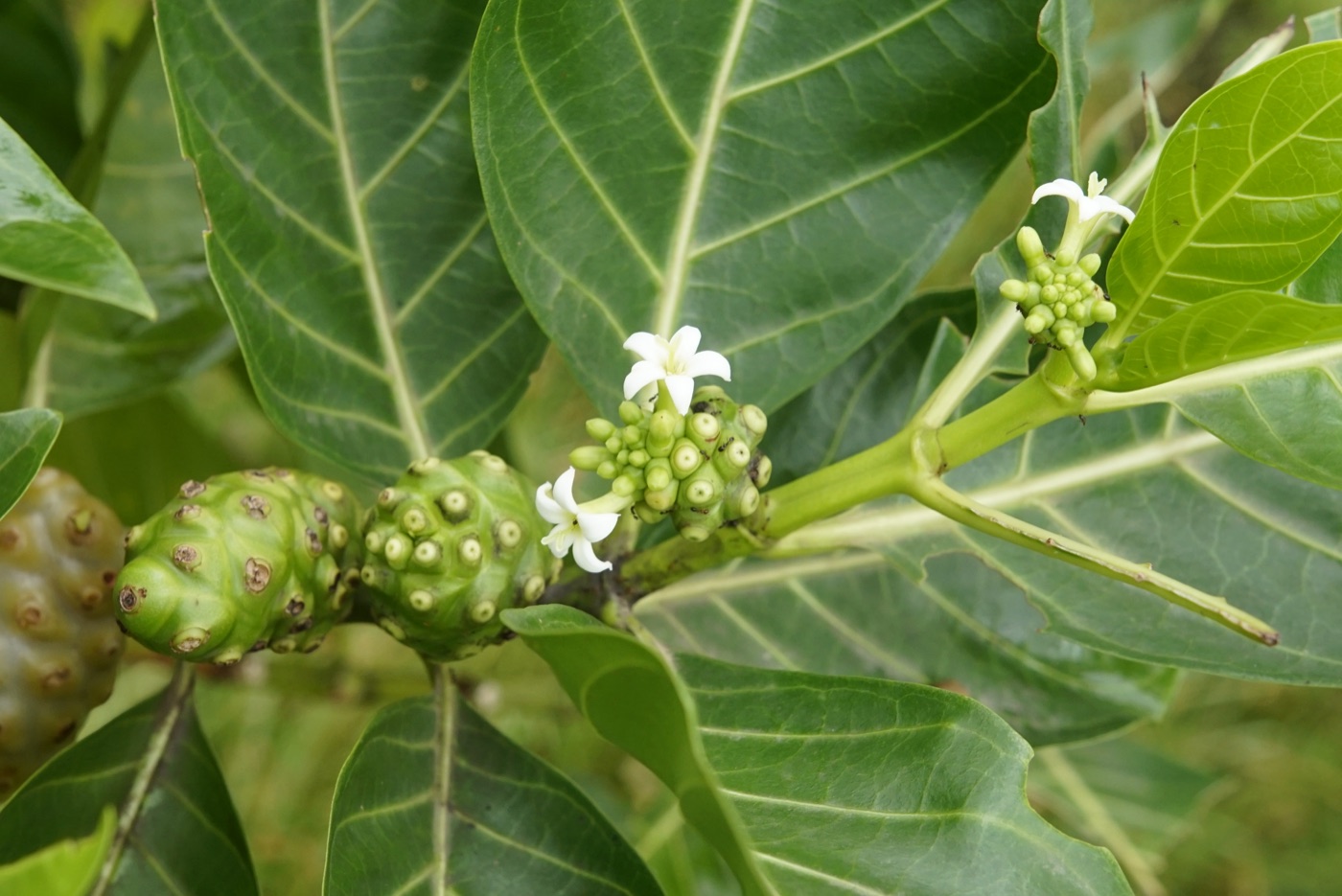
Morinda citrifoliaAlso known as Indian mulberry · Cheese fruit · Nhàu
A small tropical tree with large glossy leaves and lumpy fruit used mostly for juice. It fruits young and nearly year-round in warm conditions.
Before you plant
These conditions determine whether it will thrive.
Tolerates many soils, including somewhat salty ground.
Sheltered courtyard or a large container moved under cover in winter.
Right plant, right place
Will Noni grow at your Arizona property?
Fruits within a year or two. Place it away from seating areas because of the smell of ripe fruit.
Best regional fit: Urban core · USDA 9b–10a.
Light
Sun exposure
Morning sun with afternoon shade from June through September, such as the east side of a house or under a taller nurse tree. Protect from frost on winter nights.
Water
Irrigation
Moderate and steady.
Fruit set
Pollination
Self-fertile.
Harvest
How to use it
Mostly juiced or fermented. Ripe fruit has a strong, cheese-like smell.
Planting & stewardship
How to help Noni thrive
- 1
Shade from afternoon sun in summer.
- 2
Protect on every frost night.
- 3
Feed lightly through the warm season.
- 4
Pick fruit before it drops and smells.