

Native & adapted
Loquat
Eriobotrya japonicaAlso known as Japanese plum · Japanese medlar · Níspero · Sơn trà
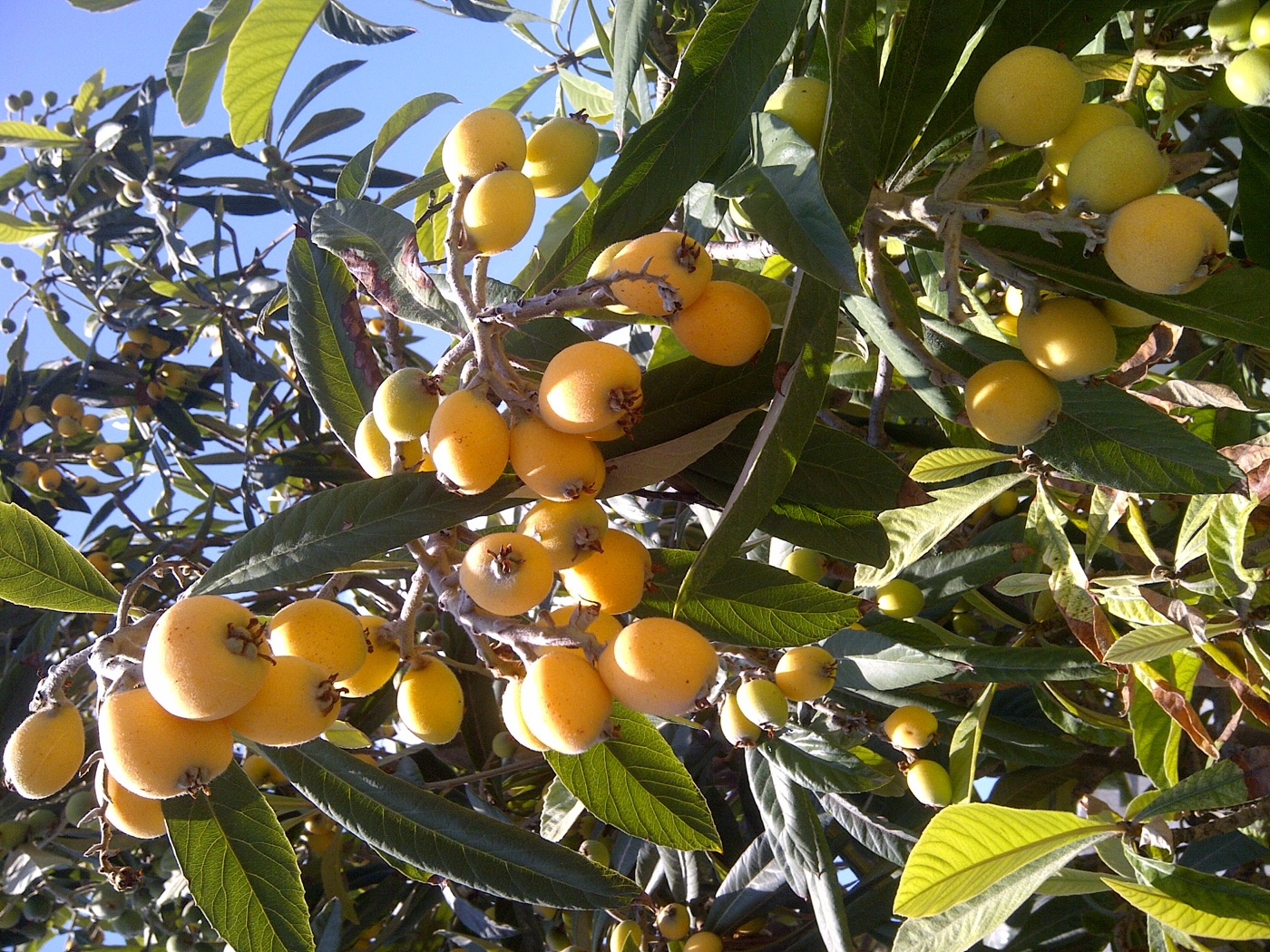
An easy evergreen that flowers in fall and ripens sweet, apricot-colored fruit in spring. Very cold hardy, but needs heavy shade for its first two Phoenix summers.
Before you plant
These conditions determine whether it will thrive.
Fast-draining soil; tolerates alkaline ground with compost.
Protect from west sun while young. Avoid frost pockets so the winter flowers survive.
Right plant, right place
Will Loquat grow at your Arizona property?
Better in the ground than in a pot. Grows and behaves much like citrus. Watch for fire blight.
Best regional fit: Urban core · USDA 9b–10a, Valley suburbs · USDA 9a–9b, Desert outskirts · USDA 8b–9b, High desert · USDA 6a–8b.
Light
Sun exposure
Heavy afternoon shade for the first two summers, then full or partial sun.
Water
Irrigation
Moderate. Deep water every 7 to 10 days in summer.
Fruit set
Pollination
Most varieties are self-fertile; bees love the fall flowers.
Harvest
How to use it
Fresh, in jams, pies and syrups.
Planting & stewardship
How to help Loquat thrive
- 1
Shade young trees heavily during their first two summers.
- 2
Thin fruit clusters after set for larger fruit.
- 3
Prune out any blackened, scorched-looking shoots, a sign of fire blight.
- 4
Water deeply and mulch the root zone.