

Native & adapted
Jamaican cherry
Muntingia calaburaAlso known as Strawberry tree · Panama berry · Calabura · Trứng cá
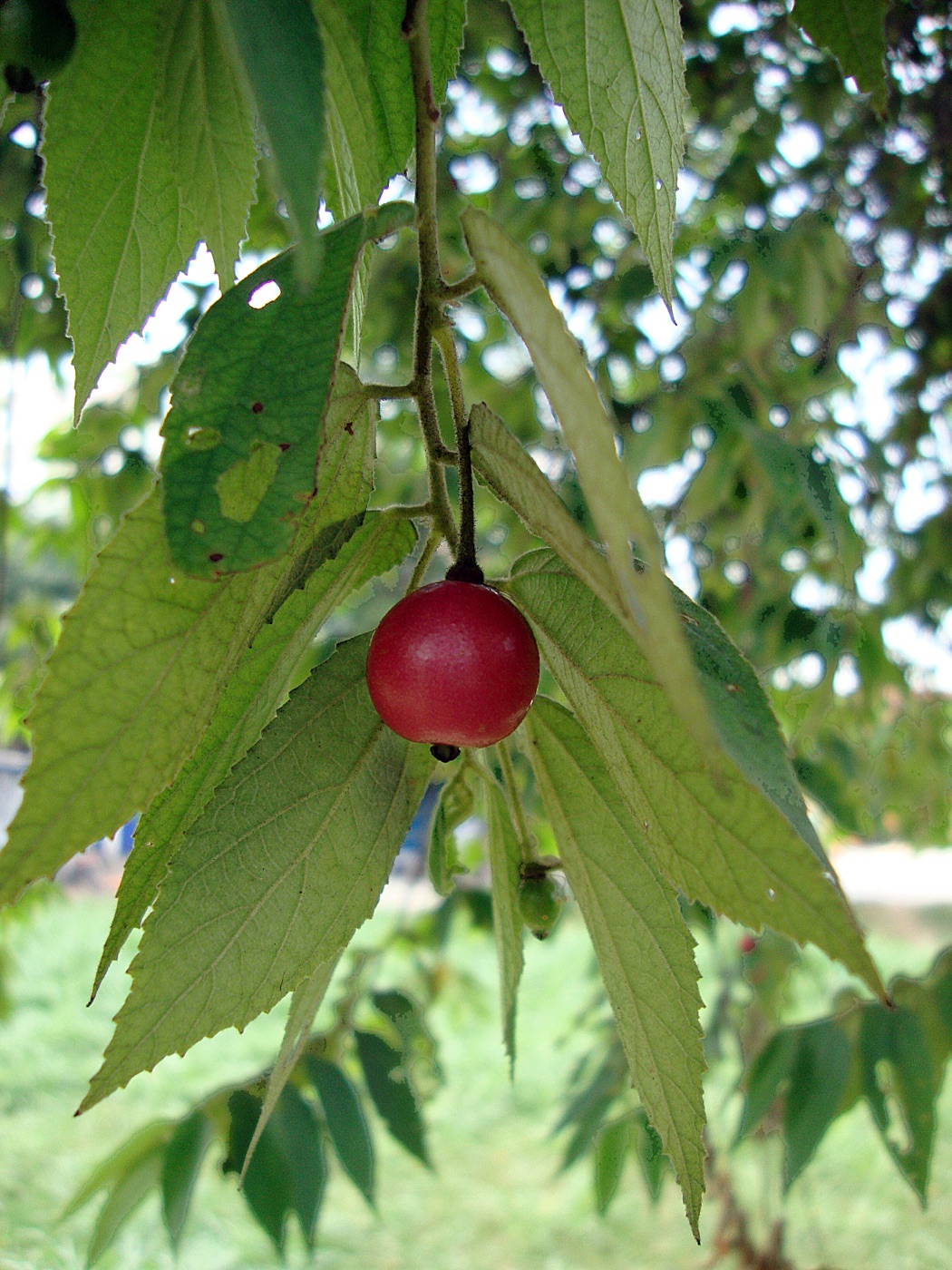
A very fast tree that fruits in its first year, with tiny red berries that taste like cotton candy. A good quick nurse tree and a favorite with kids.
Before you plant
These conditions determine whether it will thrive.
Tolerates poor, alkaline and sandy soil.
Sunny, frost-protected spot.
Right plant, right place
Will Jamaican cherry grow at your Arizona property?
Grows up to 15 ft in its first year or two. Use it as fast shade while slower fruit trees establish.
Best regional fit: Urban core · USDA 9b–10a, Valley suburbs · USDA 9a–9b.
Light
Sun exposure
Full sun.
Water
Irrigation
Moderate. Deep water weekly in summer.
Fruit set
Pollination
Self-fertile.
Harvest
How to use it
Eaten fresh by the handful, or cooked into jam.
Planting & stewardship
How to help Jamaican cherry thrive
- 1
Prune hard if it outgrows its space; it recovers quickly.
- 2
Cover young trees on frost nights.
- 3
Water deeply and let the soil dry a little between waterings.
- 4
Birds love the fruit; pick often.