

Native & adapted
Hong Kong orchid tree
Bauhinia × blakeanaAlso known as Hong Kong orchid · Bauhinia blakeana · Orchid tree
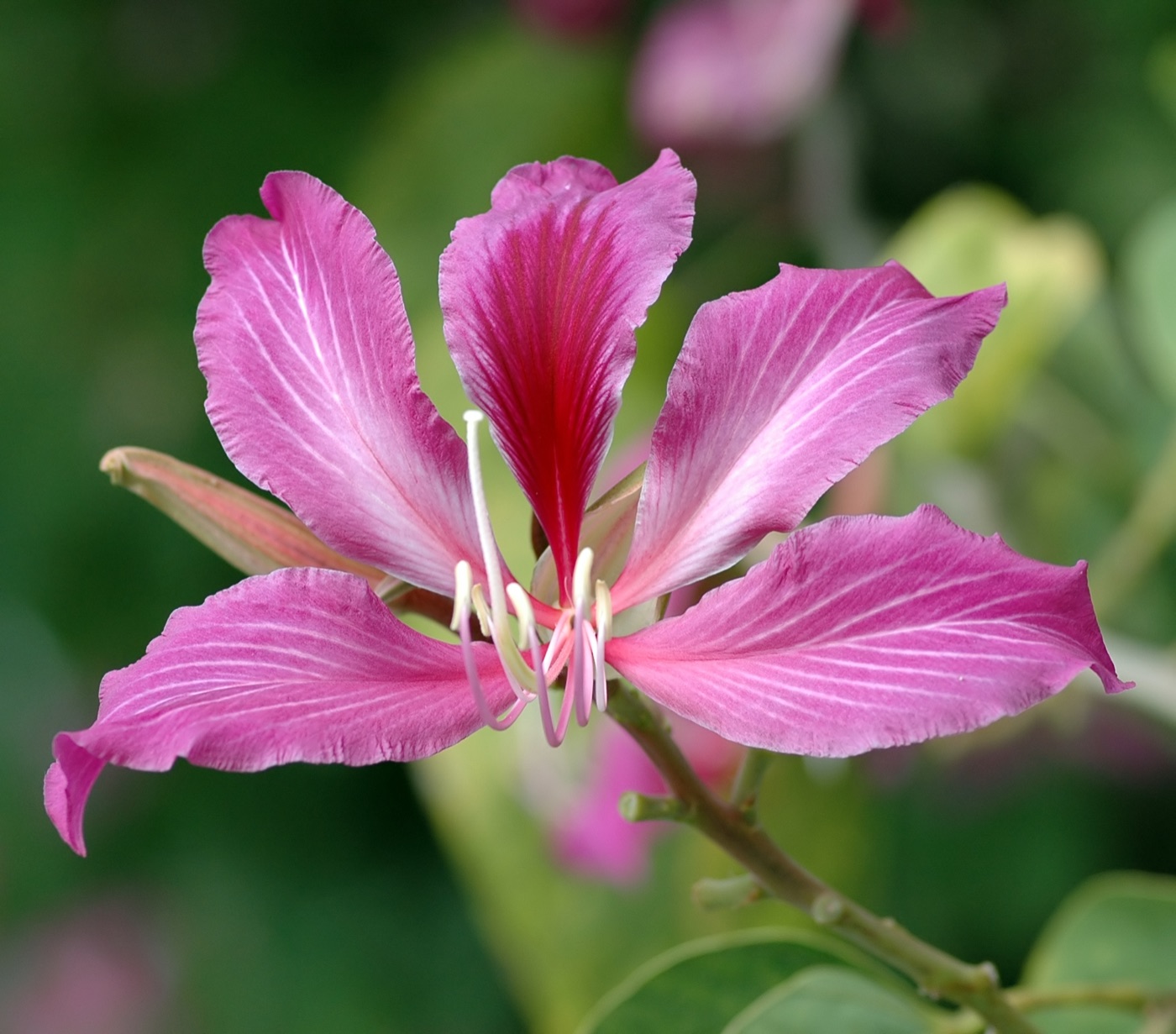
A fast, nearly evergreen tree with large magenta flowers from late fall into spring. It is sterile, so it skips the messy seed pods of other orchid trees.
Before you plant
These conditions determine whether it will thrive.
Fast-draining soil. In alkaline Phoenix soil it often needs chelated iron and some soil sulfur to keep leaves green.
Warm, frost-protected spot, such as a south-facing courtyard or near a wall.
Right plant, right place
Will Hong Kong orchid tree grow at your Arizona property?
Branches can be brittle in monsoon winds. Train a strong central structure while young and keep it out of the most wind-exposed corners.
Best regional fit: Urban core · USDA 9b–10a, Valley suburbs · USDA 9a–9b.
Light
Sun exposure
Full sun to light afternoon shade. Young trees appreciate afternoon shade their first summer.
Water
Irrigation
Moderate. Deep water every 7 to 10 days in summer.
Fruit set
Pollination
Sterile hybrid; it does not set seed. Hummingbirds and bees visit the flowers.
Harvest
How to use it
Grown for flowers and shade.
Planting & stewardship
How to help Hong Kong orchid tree thrive
- 1
Stake lightly the first year and prune for a strong single or low multi-trunk form.
- 2
Feed with an iron-rich fertilizer in spring if leaves yellow.
- 3
Cover young trees on frost nights.
- 4
Thin crowded branches after flowering to reduce wind damage.