

Native & adapted
Dragon fruit
Selenicereus undatusAlso known as Pitaya · Pitahaya · Strawberry pear · Hylocereus undatus · Thanh long
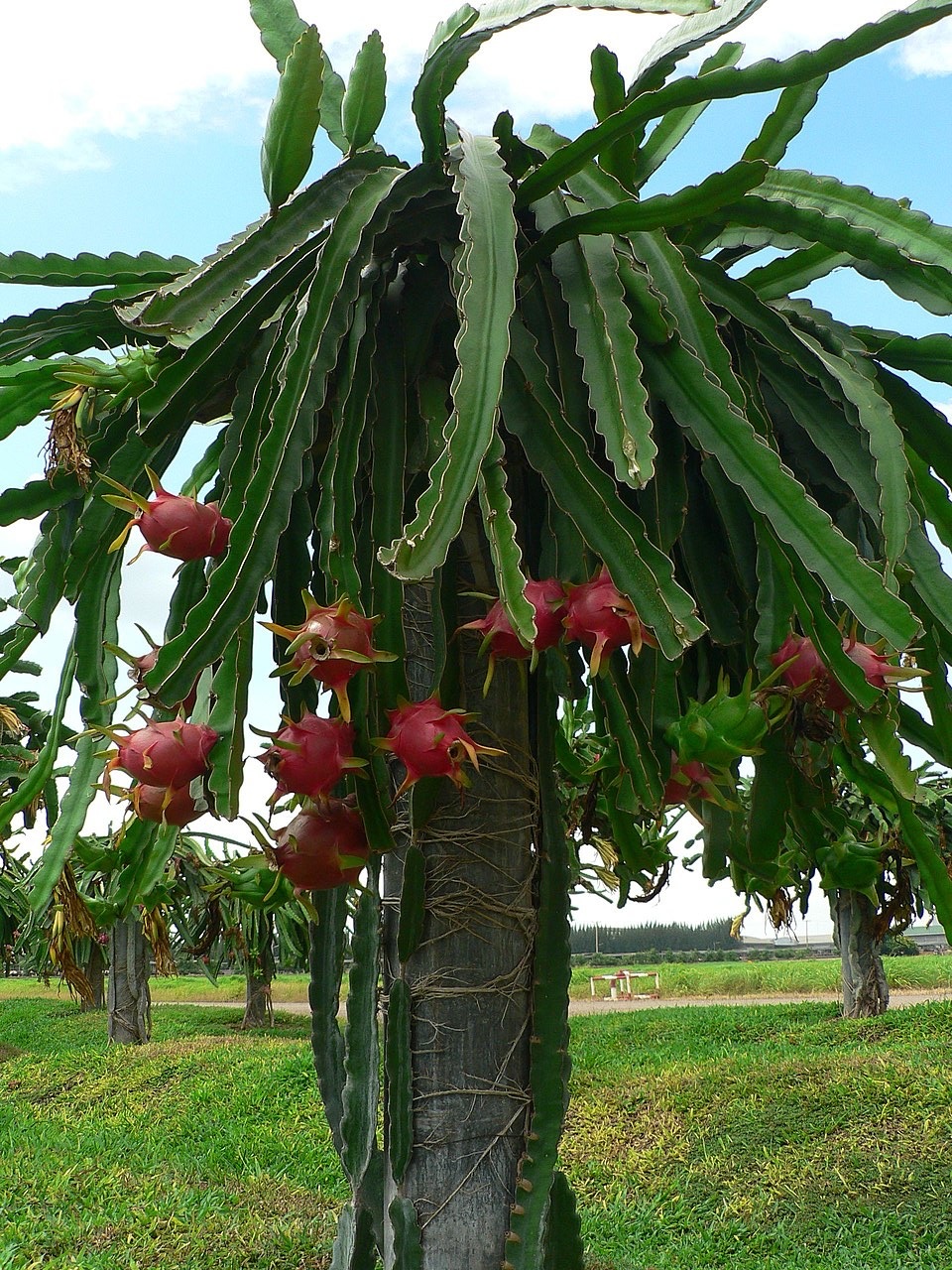
A climbing cactus with huge white night flowers and bright fruit. It grows well in Phoenix on a sturdy post if shaded from the harshest summer sun.
Before you plant
These conditions determine whether it will thrive.
Fast-draining soil rich in compost. Tolerates alkaline soil better than most tropicals.
East-facing wall or under shade cloth in summer, with frost cover in winter.
Right plant, right place
Will Dragon fruit grow at your Arizona property?
Needs a strong post or trellis about 5 to 6 ft tall. A 15-gallon or larger pot works well and can be moved into shade in summer.
Best regional fit: Urban core · USDA 9b–10a, Valley suburbs · USDA 9a–9b.
Light
Sun exposure
Full sun in spring and fall; 30 to 50% shade from June to September, when stems sunburn yellow.
Water
Irrigation
Moderate. Much more than desert cacti: water weekly in summer, and keep it barely moist in winter.
Fruit set
Pollination
Some varieties are self-fertile; others need a second variety. Hand pollinating with a brush at night greatly improves fruit set.
Harvest
How to use it
Scoop the chilled flesh with a spoon, or blend it into drinks and bowls.
Planting & stewardship
How to help Dragon fruit thrive
- 1
Tie stems to the post until they reach the top, then let them drape over.
- 2
Shade from mid-summer sun with 30 to 50% shade cloth.
- 3
Hand pollinate between two varieties after dark for a heavier crop.
- 4
Cover with frost cloth on nights below 32°F.