

Native & adapted
Amla
Phyllanthus emblicaAlso known as Indian gooseberry · Emblic · Amalaki · Nellikai
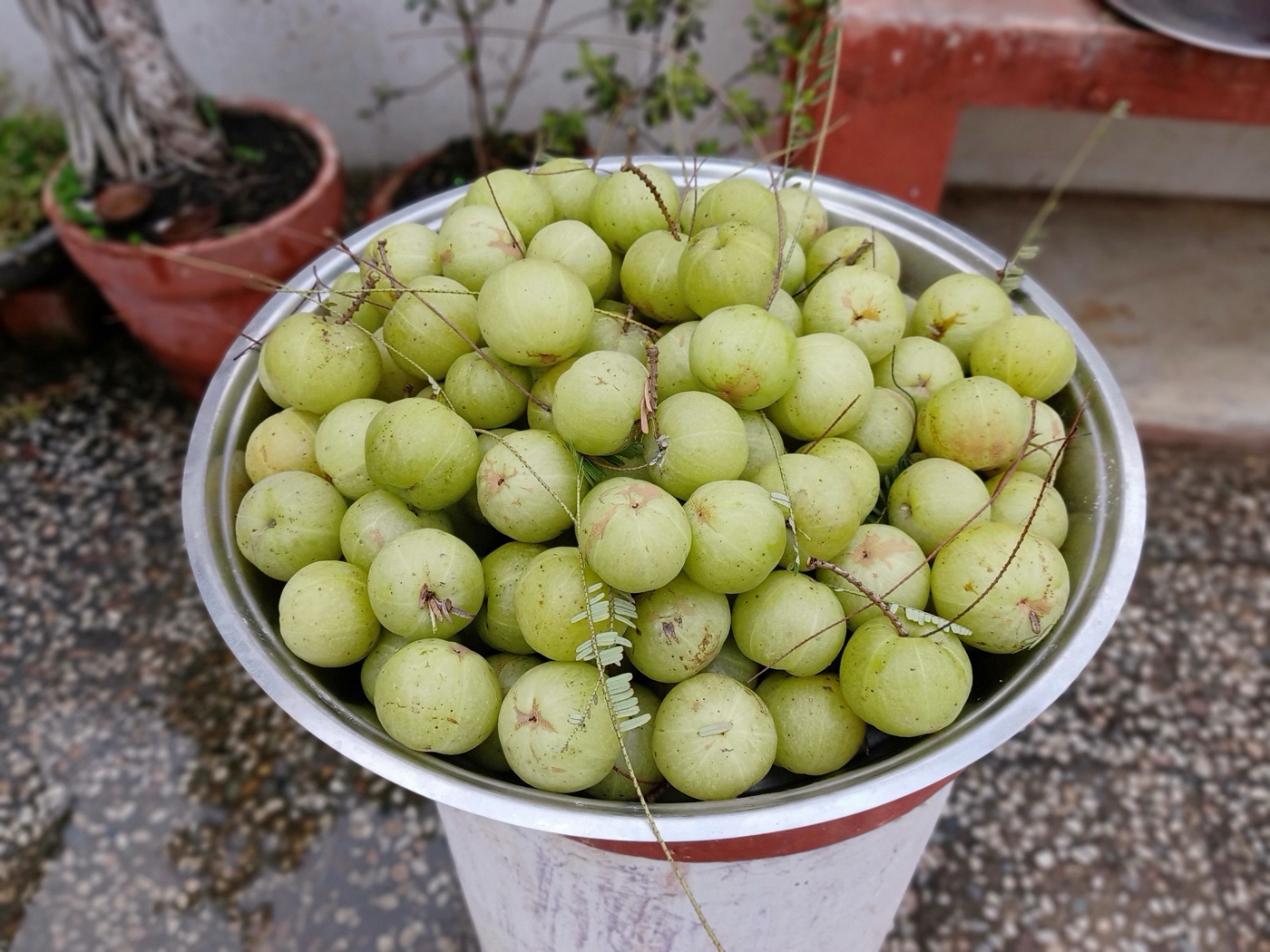
A graceful tree with feathery leaves and sour green fruit prized in Indian cooking and Ayurvedic medicine. Handles full Phoenix sun well once established.
Before you plant
These conditions determine whether it will thrive.
Tolerates poor, alkaline and slightly salty soil.
Sunny spot with frost protection while young; container culture works for the first years.
Right plant, right place
Will Amla grow at your Arizona property?
Drops leaves briefly in the cool season. Start in a pot and plant out once it is a few feet tall.
Best regional fit: Urban core · USDA 9b–10a, Valley suburbs · USDA 9a–9b.
Light
Sun exposure
Full sun.
Water
Irrigation
Moderate. Deep water weekly in summer; drought tolerant once established.
Fruit set
Pollination
Fruit set improves with a second variety nearby.
Harvest
How to use it
Very sour and astringent. Pickled, candied, juiced or cooked into chutney and preserves.
Planting & stewardship
How to help Amla thrive
- 1
Protect young trees whenever nights fall into the 30s°F.
- 2
Water deeply and let the soil dry slightly between waterings.
- 3
Prune lightly to shape after harvest.
- 4
Plant two varieties for better fruit set.