

Native & adapted
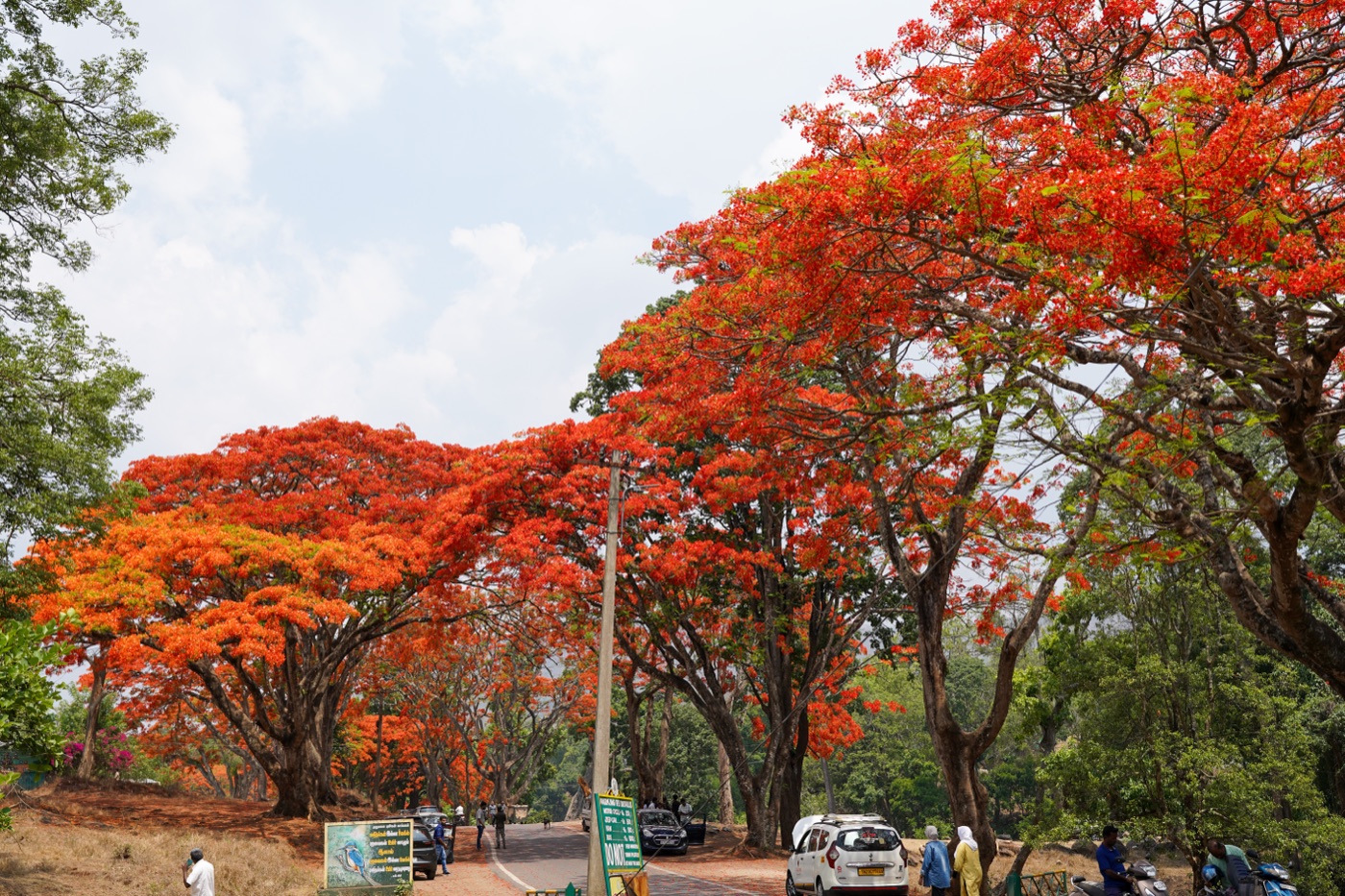
Royal poinciana
Delonix regiaAlso known as Flame tree · Flamboyant · Gulmohar · Flame of the forest · Phượng vĩ
A spreading shade tree that covers itself in scarlet flowers in early summer. It loves Phoenix heat but needs a warm, frost-protected site to survive its first winters.
Before you plant
These conditions determine whether it will thrive.
Fast-draining soil; tolerates alkaline ground.
The warmest spot available, on the south side of a building or in an urban heat island. Frost protection is needed for the first two or three winters.
Right plant, right place
Will Royal poinciana grow at your Arizona property?
Surface roots and a very wide canopy. Plant well away from paving, pools and foundations. Usually starts flowering around age three.
Best regional fit: Urban core · USDA 9b–10a.
Light
Sun exposure
Full sun. Flowering is strongest with heat and long days.
Water
Irrigation
Moderate. Deep water every 7 to 10 days in summer; keep winter watering light.
Fruit set
Pollination
Insect and bird pollinated; forms long woody pods.
Harvest
How to use it
Grown for flowers and broad, filtered shade.
Planting & stewardship
How to help Royal poinciana thrive
- 1
Wrap the trunk and cover the canopy on frost nights while young.
- 2
Train a high, wide branch structure early; the canopy spreads much wider than tall.
- 3
Water deeply and widely to discourage surface roots.
- 4
Rake up pods if they become messy.