

Native & adapted
Moringa
Moringa oleiferaAlso known as Moringa tree · Drumstick tree · Horseradish tree · Malunggay
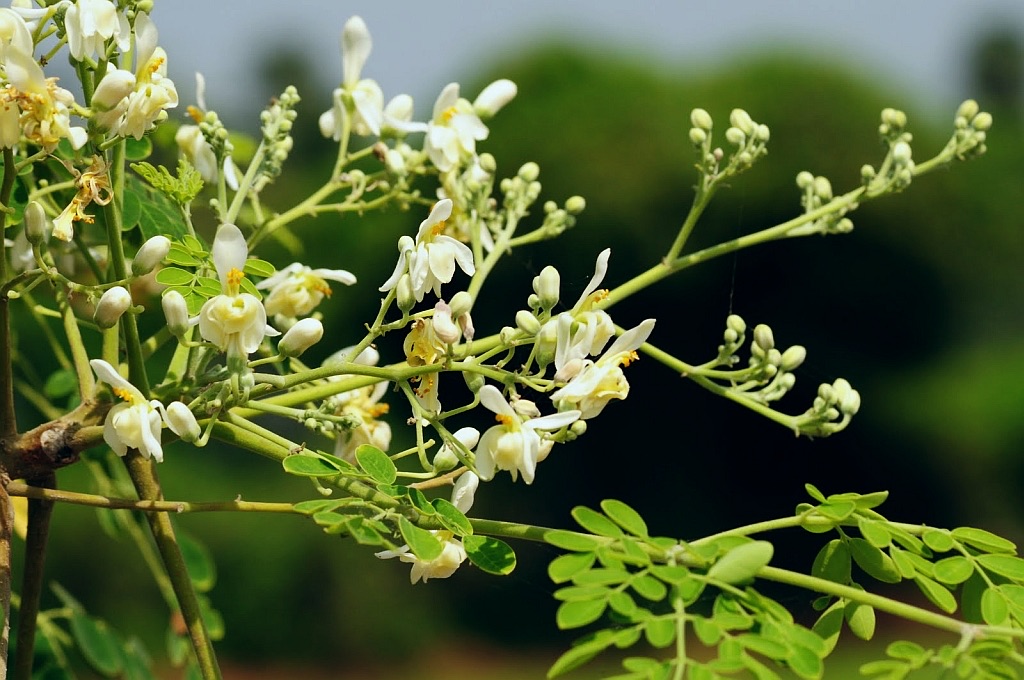
A very fast, airy tree grown for its nutritious leaves and long seed pods. It loves Phoenix summer heat, freezes back in a cold winter and usually regrows from the trunk or roots in spring.
Before you plant
These conditions determine whether it will thrive.
Any fast-draining soil, including sandy or alkaline ground. Avoid heavy clay that stays wet.
Warm spot near a south or west wall helps it survive frost nights. Young trees benefit from frost cloth below 32°F.
Right plant, right place
Will Moringa grow at your Arizona property?
Grows so fast it can shade out neighbors. Plant where it can be cut back hard each spring without leaving a hole in the canopy.
Best regional fit: Urban core · USDA 9b–10a, Valley suburbs · USDA 9a–9b.
Light
Sun exposure
Full sun, including west exposure once established.
Water
Irrigation
Low to moderate. Deep watering every 7 to 10 days in summer; much less in winter, when soggy roots cause rot.
Fruit set
Pollination
Self-fertile. Bees visit the fragrant flowers.
Harvest
How to use it
Leaves are cooked or dried into powder. Young pods are cooked like green beans, and the flowers are edible too.
Planting & stewardship
How to help Moringa thrive
- 1
Cut the main stems back to 4 to 6 ft in early spring to keep leaves within reach and the tree bushy.
- 2
Wrap or cover young trees on frost nights; older trees that freeze back usually resprout.
- 3
Let the soil dry between waterings, especially in winter.
- 4
Harvest often; regular picking keeps new, tender growth coming.