

Native & adapted
Indian cluster fig
Ficus racemosaAlso known as Cluster fig · Gular · Udumbara · Ficus glomerata
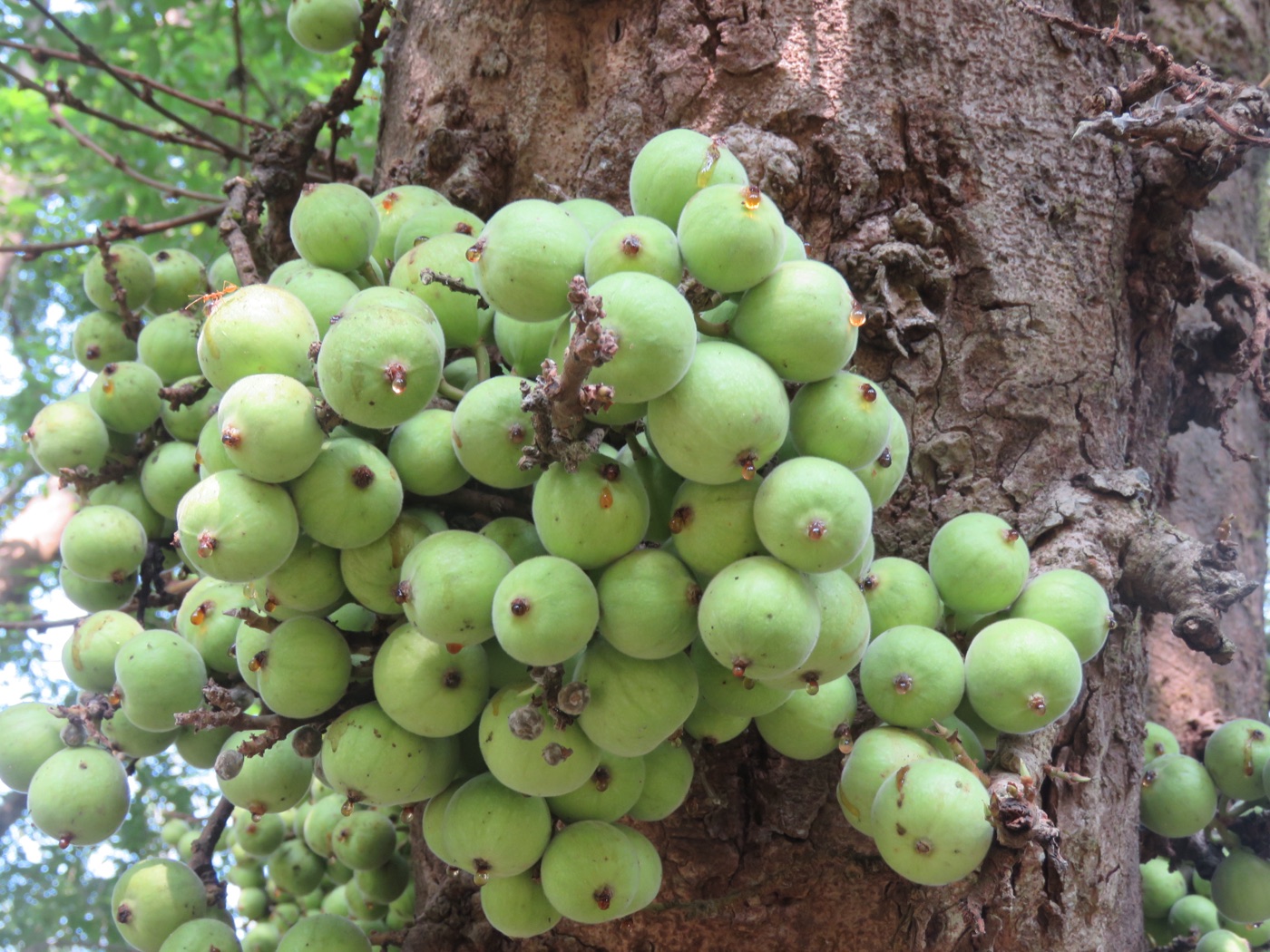
A large fig tree that bears clusters of small figs directly on its trunk and main branches. Grown in India for food, shade and its spiritual significance.
Before you plant
These conditions determine whether it will thrive.
Tolerates a wide range of soils.
Large open space, well away from pipes, pools and foundations.
Right plant, right place
Will Indian cluster fig grow at your Arizona property?
Aggressive roots like most large figs. Plant at least 20 ft from buildings and water lines.
Best regional fit: Urban core · USDA 9b–10a, Valley suburbs · USDA 9a–9b.
Light
Sun exposure
Full sun once established.
Water
Irrigation
Moderate. Deep water weekly in summer.
Fruit set
Pollination
In its native range a specific fig wasp pollinates it. That wasp is not established in Arizona, so expect a lighter or less reliable crop.
Harvest
How to use it
Ripe figs are eaten fresh or cooked; unripe ones are cooked as a vegetable.
Planting & stewardship
How to help Indian cluster fig thrive
- 1
Water deeply and widely to encourage deep roots.
- 2
Cover young trees on frost nights.
- 3
Prune to keep a clear trunk and manageable size.
- 4
Expect fruit drop; rake regularly.